Have you ever smoothed on a good serum, then a cream, and watched little white crumbs roll off your cheeks? That happened to me for a while, and I blamed the products. The products were fine. The real problem was my skincare layering order, meaning the sequence I applied everything in.
Nobody seems to state the rule plainly, so here it is: thin to thick. Below I’ll cover what the rule actually means, what to do when two products feel the same, how long to wait between layers, how morning and night differ, and how the rule looks with a real routine from my own shelf.
The core rule
Thin to thick means texture, not price

“Thin to thick” has nothing to do with price or with whatever’s trending. It’s about texture and water content. Watery layers like toners and essences go first. They’re mostly water plus humectants such as glycerin, butylene glycol and hyaluronic acid, so they spread fast and sink in quickly. Sealing layers like creams, oils and balms go last, because their job is to sit on top and slow down water loss from everything underneath.
A typical full K-beauty sequence looks like this:
- Cleanser
- Hydrating toner
- Essence
- Serum or ampoule
- Sheet mask (optional)
- Eye cream
- Moisturiser
- Face oil or balm (night), or SPF (morning)
Treat that list as a menu, not a checklist. Most people don’t need all eight steps, and further down I’ll show you which half you can skip without losing much.
The reason order matters is plain physics. Put a heavy cream on first and a thin serum applied over it has nowhere to go. The serum sits on the cream’s film, gets dragged around by your fingertips, and rolls up into those white crumbs. You’ve paid for a serum that never properly reached your skin.
When textures match
Two similar serums? Lead with the active

Thin to thick stops helping when two products feel almost identical, like two watery serums. In that case the tiebreaker is the active ingredient. The product doing the more specific job goes on first, onto clean, slightly damp skin, where it gets the most direct contact.
Here’s a common pairing: a niacinamide serum and a hyaluronic acid serum. Niacinamide goes first. The hyaluronic acid layer follows, adding water on top and cushioning the active underneath. That cushion matters most if a higher-strength niacinamide tends to make your skin tingle.
pH-dependent actives are the exception. Pure vitamin C (L-ascorbic acid) serums are formulated to be acidic, usually below about pH 3.5, and they’re generally meant to go onto bare, clean skin with a short wait afterwards. For these, the brand’s directions beat the general rule, so read the box before you layer anything under them.
Timing between steps
Wait 30 to 60 seconds, then move on
For most steps, 30 to 60 seconds is enough. You want the previous layer absorbed but not bone dry. Slightly damp skin takes the next watery layer more easily because the humectants still have water to hold onto.
Two moments deserve a longer pause:
- After a low-pH active such as vitamin C: add another 1 to 2 minutes.
- After sunscreen, before makeup: another 1 to 2 minutes, so the SPF film can settle before foundation gets rubbed over it.
If you won’t realistically wait between every step, keep just those two pauses and relax about the rest. The middle hydrating layers are forgiving.
When pilling does show up, the cause is usually one of three things: too much product, no wait between layers, or a silicone-heavy product (look for dimethicone near the top of the INCI list) applied under a water-based one. Use less, give each layer its 30 to 60 seconds, and check the ingredient list of whatever you applied just before the crumbs appeared.
Morning versus night
AM and PM run the same direction with different jobs
The direction never changes. It’s thin to thick morning and night. What changes is the goal: mornings are about protection for the day ahead, and nights are when treatment products and richer textures do their work.
Morning 1. Gentle cleanser 2. Hydrating toner 3. Antioxidant serum (vitamin C, for example) 4. Moisturiser 5. SPF 30+, always the last skincare layer
Night 1. Oil or balm cleanser 2. Water-based cleanser 3. Hydrating toner 4. Treatment a few nights a week (a retinoid, for example) 5. Moisturiser 6. Face oil, if you like one
Sunscreen’s spot at the end of the morning routine isn’t negotiable. Anything you rub in on top of it thins out and disturbs the film that gives you the protection on the label. At night, avoid stacking several strong actives in one routine. A retinoid plus an exfoliating acid plus vitamin C on the same evening is a fast route to stinging, flaky skin.
The short version
Most people can skip half these steps
If your skin is sensitive, you’re new to routines, or you already know you won’t keep up with seven bottles a day, cut the middle steps. Four steps cover most days:
- Cleanser
- Hydrating toner
- Moisturiser
- SPF (morning)
Add a targeted product only when you have a specific goal, and add one at a time. Reach for niacinamide if uneven texture bothers you, a night-time retinoid if fine lines and firmness are your focus, and a ceramide cream if your skin feels tight and stripped. With one goal and one product, you’ll also know which product made the difference.
A longer routine can give you more, but only if you actually do it every day. Three steps you keep up will beat a ten-step routine you abandon after two weeks.
A real-world example
Booster, serum, booster, cream with Incellderm Dermatology
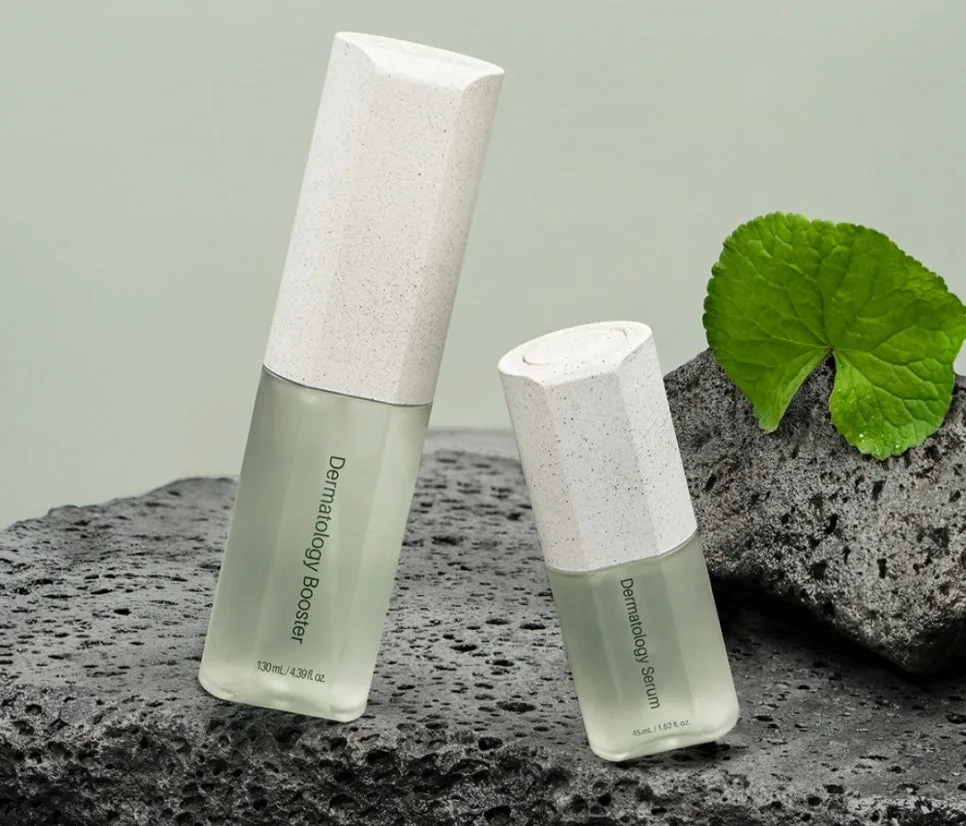
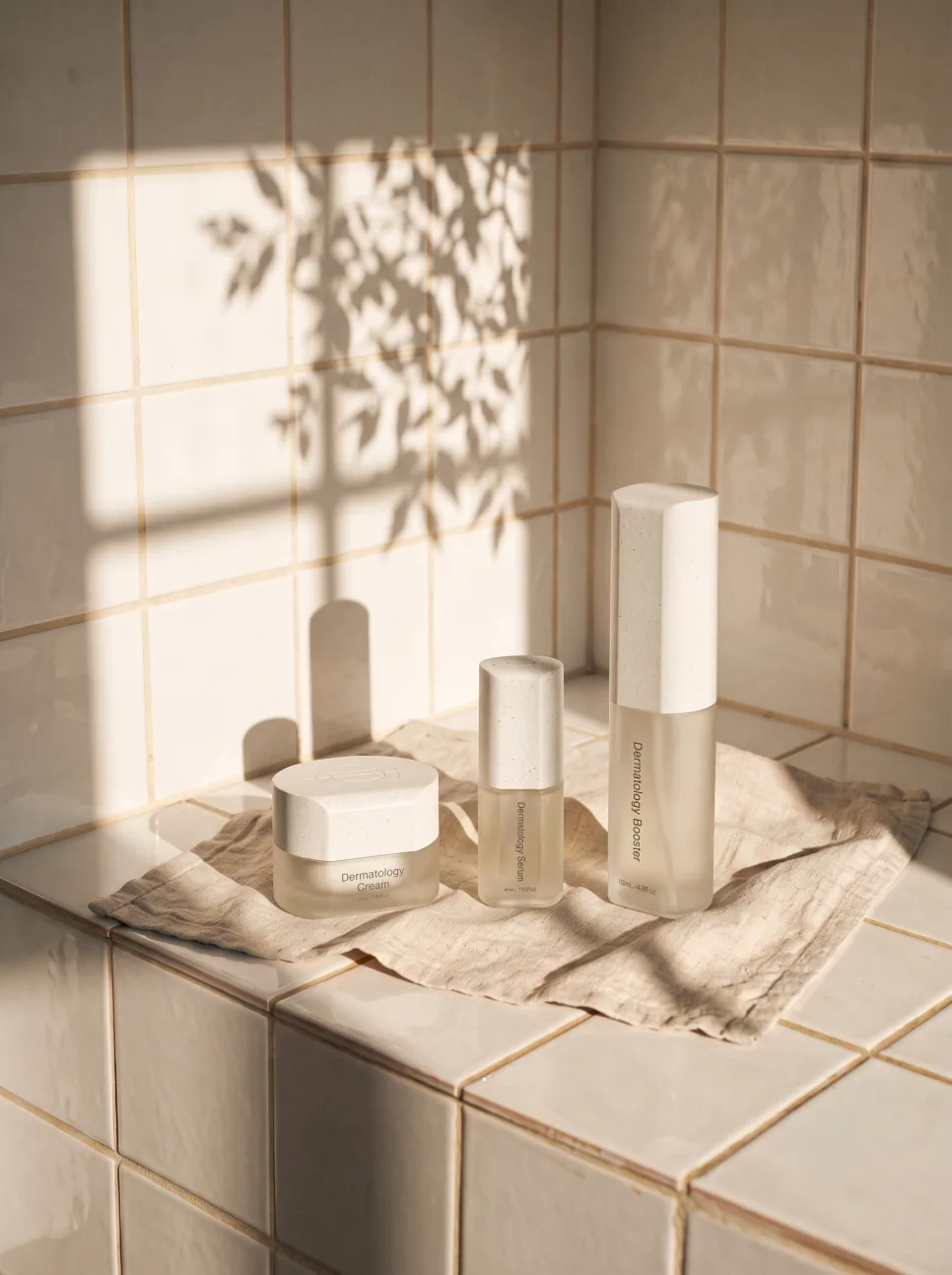
Disclosure first: I’m a partner with RIMAN, the company behind Incellderm (ICD), so I can earn a commission on sales. The disclosure box on this page has the details. The line I’ve been using lately is Incellderm’s Dermatology range, which comes as a booster, a serum and a cream. What caught my attention is how neatly it maps onto the thin-to-thick rule.
If “booster” is new to you, it’s a Korean step that goes on right after cleansing. Its job is to lay down a watery, hydrating base so the layers after it spread more easily. Most three-step routines run booster, then serum, then cream. Incellderm adds the booster a second time between the serum and the cream, so the order becomes booster, serum, booster, cream. Korean users shorten this to “bu-se-bu.”
Here’s what each step does:
- Dermatology Booster (thin layer): a moisturising booster that lays down the hydrated base. The bottle holds 130 mL.
- Dermatology Serum (middle layer): a hydrating serum aimed at a dewy glow, applied to skin that’s already damp. The bottle holds 45 mL.
- Booster again: a second watery pass over the serum adds another layer of hydration before anything heavier goes on.
- Dermatology Cream (thick layer): the densest of the three. Incellderm markets it as a lifting cream, but in this routine its real job is to be the lid that holds the earlier layers in place.
In practice, morning and night, it goes like this:
- Cleanse
- Booster, then wait 30 to 60 seconds
- Serum, then wait 30 to 60 seconds
- Booster again
- Cream
- SPF (morning only)
My honest take on the second booster pass: it’s the same idea as layering a hydrating toner twice. It adds water and humectants one more time before you seal. If your skin runs dehydrated, the extra pass is worth the 30 seconds. If you’re oily and comfortable, one pass is plenty, and you can skip the repeat. The structure also suits beginners, because each bottle you pick up is visibly thicker than the last, so you learn the rule just by doing the routine.
You don’t need all three products to start. If you just want to see whether the watery layers suit you, start with the booster and serum and keep your current moisturiser. If you already own a hydrating serum you love, the cream alone covers the sealing step.
Frequently Asked Questions
Q. Can I skip toner completely?
A. Yes. A hydrating toner is optional these days. If your moisturiser already leaves your skin comfortable rather than tight, you can drop the toner.
Q. Can I use vitamin C and niacinamide in the same routine?
A. Yes, with modern formulas. The idea that they cancel each other out comes from old lab work on raw ingredients, not on finished products. Apply the vitamin C first, wait about a minute, then apply the niacinamide.
Q. How many strong actives can go into one routine?
A. Use one per routine, morning or night. Retinoids, exfoliating acids and pure vitamin C each count as one, and stacking them is where irritation usually starts.
Tonight, line up everything on your shelf from the thinnest texture to the thickest and apply it in that order. The best layering order is the one you’re still following next month.