You put on a generous layer of moisturizer in the morning, and by 3 p.m. your cheeks feel tight and your smile lines feel stiff. If that keeps happening, the amount of cream isn’t the only thing to look at. It’s worth checking how your skin barrier is doing and what your daily habits are doing to it.
One caveat up front: tightness alone doesn’t prove your barrier is damaged. Weather, indoor heating, how you cleanse and the products you use all play a part. So this post walks through the signals your skin may be sending, then the habits and product choices that take the pressure off.
Oily on top, tight underneath
Why skin can look shiny and still feel dehydrated
Koreans have a word for that tight-from-within feeling: sok-geonjo, literally “inner dryness”. It’s an everyday expression, not a diagnosis, and it doesn’t prove that the deeper layers of your skin are short on water. It simply describes the sensation.
Your skin barrier is the protective job done by the outermost layer of skin, the stratum corneum. Skin cells and the lipids between them (fats such as ceramides) fit together like bricks and mortar. That structure slows water loss and keeps irritants out.
Moisturizer ingredients fall into three roles:
- Humectants draw in and hold water. Think glycerin and hyaluronic acid.
- Emollients smooth the gaps between skin cells so skin feels soft. Squalane and plant oils are classic examples.
- Occlusives form a film on the surface that slows evaporation. Petrolatum is the best-known one.
Many ingredients do more than one job, and most creams blend all three. That’s why the real test is how your skin feels a few hours after applying a cream, not the dewy feeling right after.
Oil (sebum) and water are also two separate things. Shine comes from sebum, while tightness relates to how much water the stratum corneum holds, so you can feel both at once. The reverse doesn’t hold either: oily skin isn’t automatically dehydrated or barrier-damaged.
Five signals worth noticing
5 signs your skin barrier needs a closer look
None of the signs below is unique to barrier problems, and counting how many you tick won’t tell you whether your barrier is damaged or how badly. Use them as prompts: note when each one started and which products or conditions make it worse.
1. Tightness after cleansing that lasts
Your face feels tight the moment you pat it dry, and the tightness lingers even after moisturizer. Harsh cleansers or washing too often can strip surface lipids and cause exactly this. Dry weather and your natural skin type also play a role. That squeaky-clean feeling after washing is not a sign that you cleansed well.
Try today: wash with lukewarm water instead of hot, and keep it brief.
2. Products you’ve always used start to sting
The toner or cream you’ve used for months suddenly tingles or burns. When skin is dry and reactive, the same product can feel harsher than before. It could also mean the product has gone off, or that you’re reacting to a specific ingredient. Don’t push through stinging on the theory that it means the product is working.
Try today: pause anything that stings and keep only the moisturizer you’ve used comfortably, then watch how your skin responds.
3. Flaking and rough texture
Makeup clings to dry patches, or white flakes appear on your cheeks and around your mouth. When the stratum corneum can’t hold enough water, the surface turns rough and dull. Flaking and roughness can also come from other skin conditions such as dermatitis. Rubbing or peeling off loose flakes over and over only adds irritation.
Try today: put the scrub away and press a thin second layer of moisturizer onto flaky spots.
4. Redness and irritation that keep coming back
Your face flushes easily after cleansing or skincare, and dryness and itching come back together. A weakened barrier can make skin react to small triggers. But contact dermatitis (a reaction to something that touched your skin) or rosacea (a condition with recurring facial redness) can look similar, and both need a proper look. Don’t try to sort this one out alone.
Try today: jot down when the redness appeared and which products you used that day. That log is useful if you see a dermatologist.
5. Temperature changes and friction set your skin off
Cold wind, or the spots where a face mask or towel rubs, quickly turn hot and prickly. Friction and big temperature swings put extra load on skin that’s already reactive. A brief flush in a hot room, though, can be a perfectly normal response, so that alone doesn’t point to a barrier problem.
Try today: don’t rub your face with the towel. Press it gently to blot the water.
Habits before products
What to check when moisturizer isn’t enough

- Hot water and over-cleansing. Hot water can strip the oils your skin needs. Stop washing once your face is clean rather than chasing the squeak, and cut back on frequent exfoliation and scrubbing.
- Stacking actives. Using a retinoid, AHA/BHA and vitamin C all at once makes it hard to tell which one is irritating you. Add new products one at a time. If you use a prescription treatment, don’t stop it on your own; talk to the clinician who prescribed it.
- Timing and strength of your moisturizer. Don’t wait until your skin is bone-dry and tight. Moisturize while it’s still slightly damp. If tightness lasts into the afternoon, a richer cream may suit you better than a lotion, and an ointment can work for especially dry spots.
- Texture and amount. More isn’t better. Instead of a thick layer everywhere, go thin on shiny areas and add a second layer only on tight cheeks and around the mouth.
- Dry indoor air. Keep heater airflow off your face. If you use a humidifier, clean it regularly.
A simple routine:
- Morning: a gentle cleanse suited to your skin → moisturizer → sunscreen
- Evening: remove makeup and sunscreen with a mild cleanser → moisturizer while skin is still a little damp → a thin extra layer only where you feel tight
- Ease off for now: scrubs and peeling pads, several actives at once, hot-water cleansing
Before you add more products, make sure the moisturizer you already own actually keeps you comfortable.
Reading the label
How to choose a moisturizer for tight skin
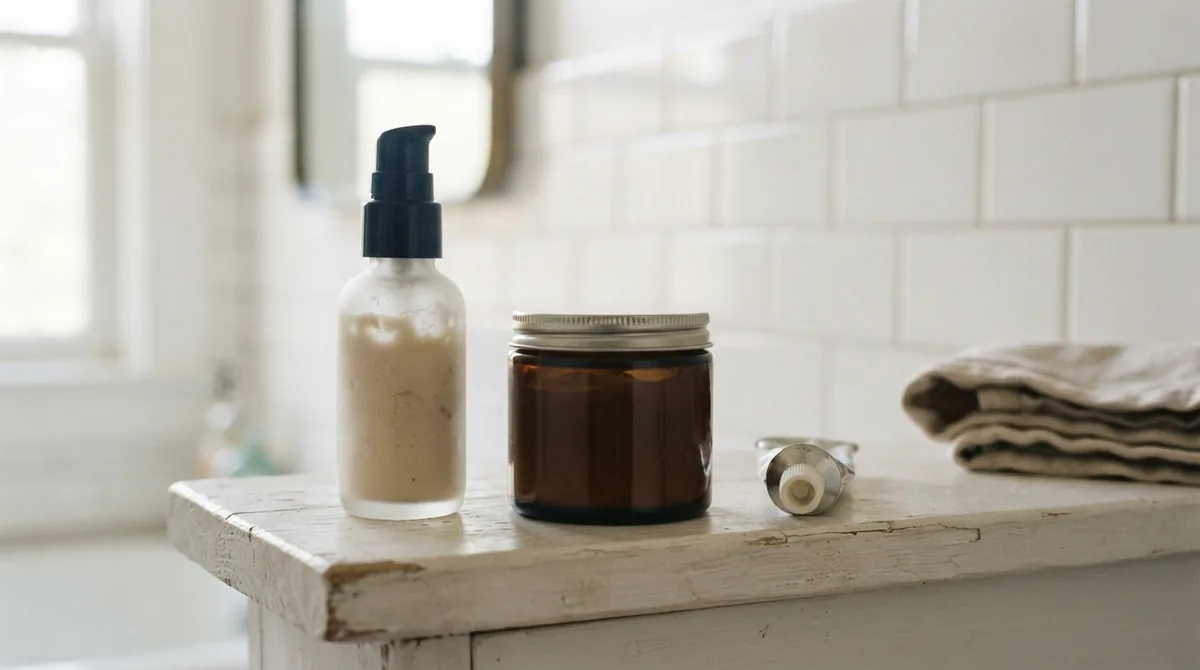
Three ingredients are worth spotting on the label:
- Glycerin: a classic humectant that draws in water and holds it in the stratum corneum.
- Ceramides: one of the lipid types that make up the skin barrier, helping fill the spaces between skin cells.
- Petrolatum: forms a film on the surface to slow water loss. It feels heavy, so it’s best on very dry spots or at night.
One good ingredient doesn’t guarantee results. The whole formula matters more, including the mix of ingredients and the texture, along with how it actually feels on your skin and whether it irritates. A good benchmark: a few hours after applying, your skin still feels comfortable with no tightness.
Words like “natural”, “free-from” or “hypoallergenic” don’t mean a product is safe for everyone. Some people react to plant extracts or fragrance, so if your skin is reactive, start with fragrance-free options. Test a new product on a small area first and introduce one product at a time.
Tightness after moisturizer can come from your cleansing habits, exfoliation and environment, not just how much cream you use. Less irritation and a simple, steady moisturizing routine is the first step. Treat the five signs as a way to check in with your skin, not as diagnostic criteria.
If redness, itching or stinging persists or gets worse, or your skin cracks or weeps, see a dermatologist to find out what’s going on.
When in your day do you feel that tightness the most?
References