Korean sunscreen application is simple once you get two things right: the amount and the timing. You want roughly a quarter teaspoon on the face as the final AM skincare step, and a reapply every two hours when you’re outside. The texture may feel weightless, but SPF only performs at the label rating when you use enough of it.
Routine placement
Where does sunscreen go in a Korean routine?
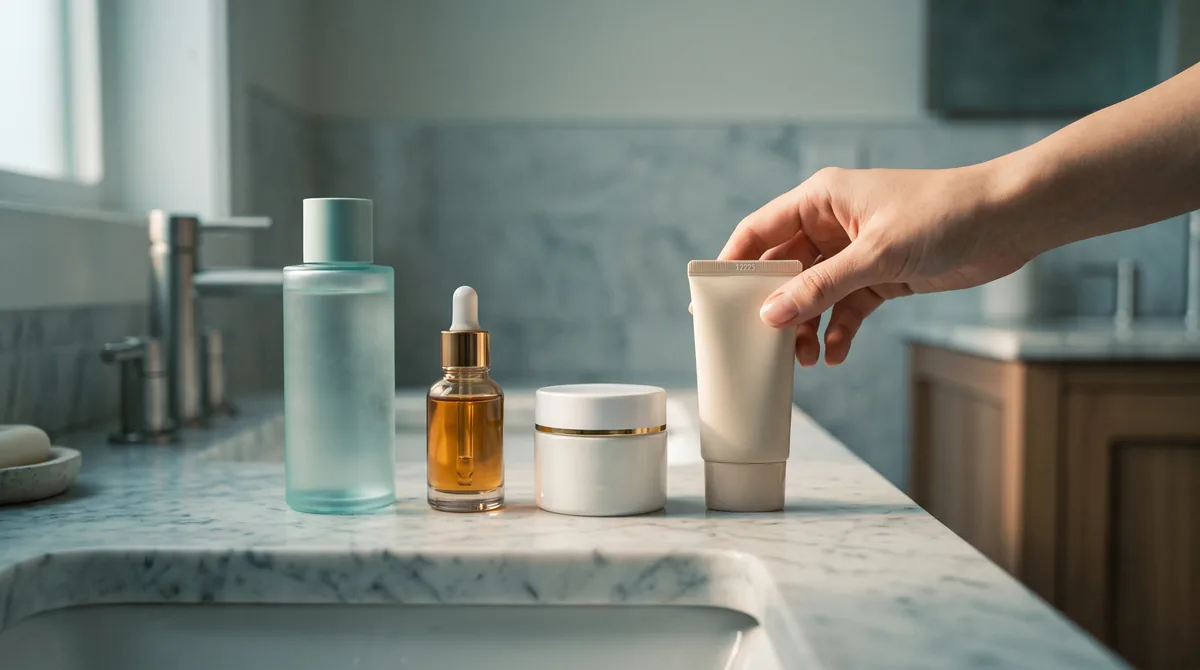
Sunscreen is the last skincare step in the morning, applied after moisturizer and before makeup. Anything you put on top of it (except more SPF) is either makeup or a booster — not skincare.
The order matters because sunscreens are formulated to sit on the surface as a uniform film. If you layer a rich cream or oil on top, you can disturb that film and drop the actual protection you get. Give your moisturizer about a minute to settle, then apply SPF in even sections: forehead, each cheek, nose, chin, and down the neck.
At night, you skip it. Sunscreen is an AM-only step; PM is for repair (essence, treatment, moisturizer).
The right amount
How much Korean sunscreen should you actually use?
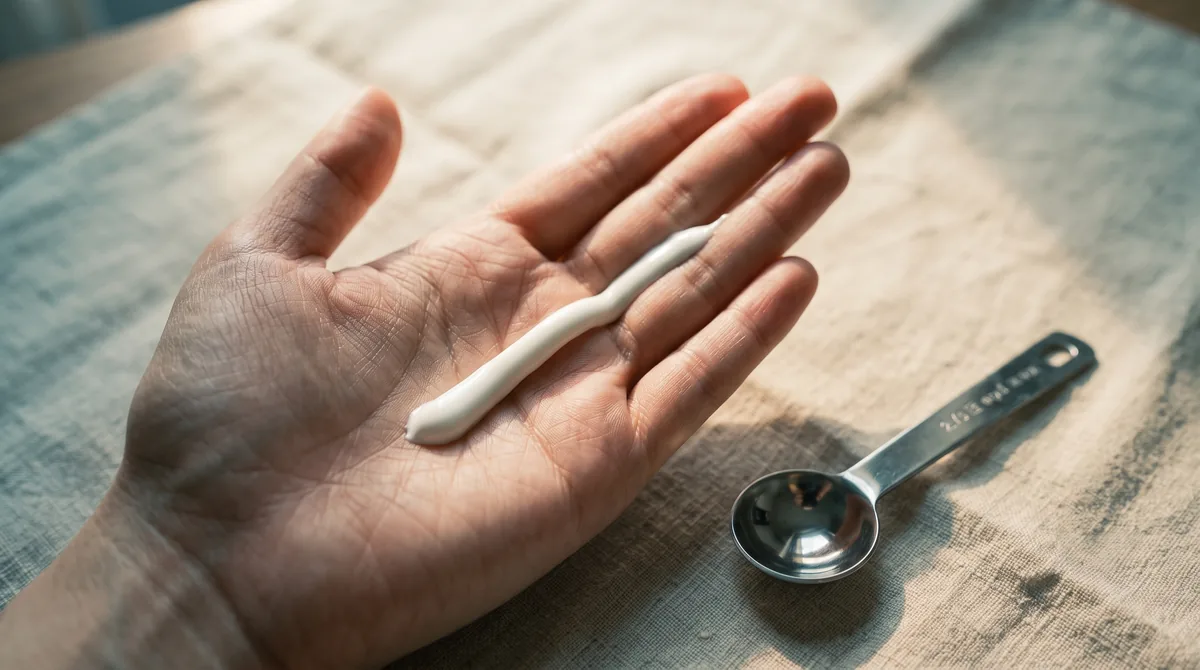
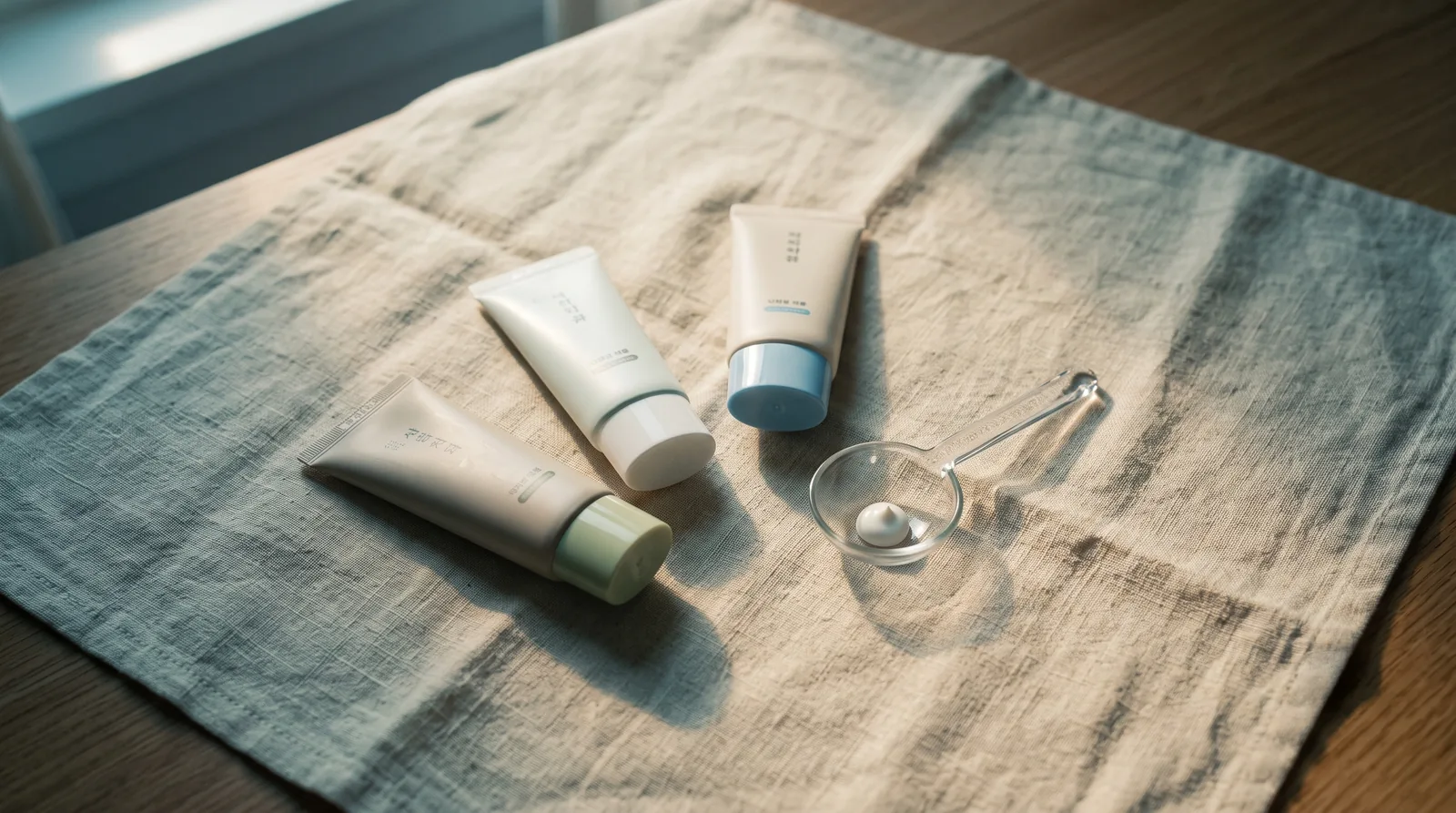
For the face, use about 1/4 teaspoon (~1.25 ml), or the “two-finger rule” — a strip of sunscreen along your index and middle finger. Add another 1/4 teaspoon for the neck and ears if they’ll see sun.
This is the amount labs use to test SPF, so it’s the amount that gives you the SPF on the bottle. Most people use a third to half of that, which means an SPF 50 sunscreen is delivering closer to SPF 15-20 in real life. Korean formulas are often thin and cosmetically light, which makes under-application even easier — you don’t feel it, so you assume a small drop is enough.
A practical fix: apply in two thin layers, five minutes apart. It’s more comfortable than one heavy layer and gets you closer to the rated amount without a white cast or pilling.
Reapply strategy
How do you reapply sunscreen over makeup?
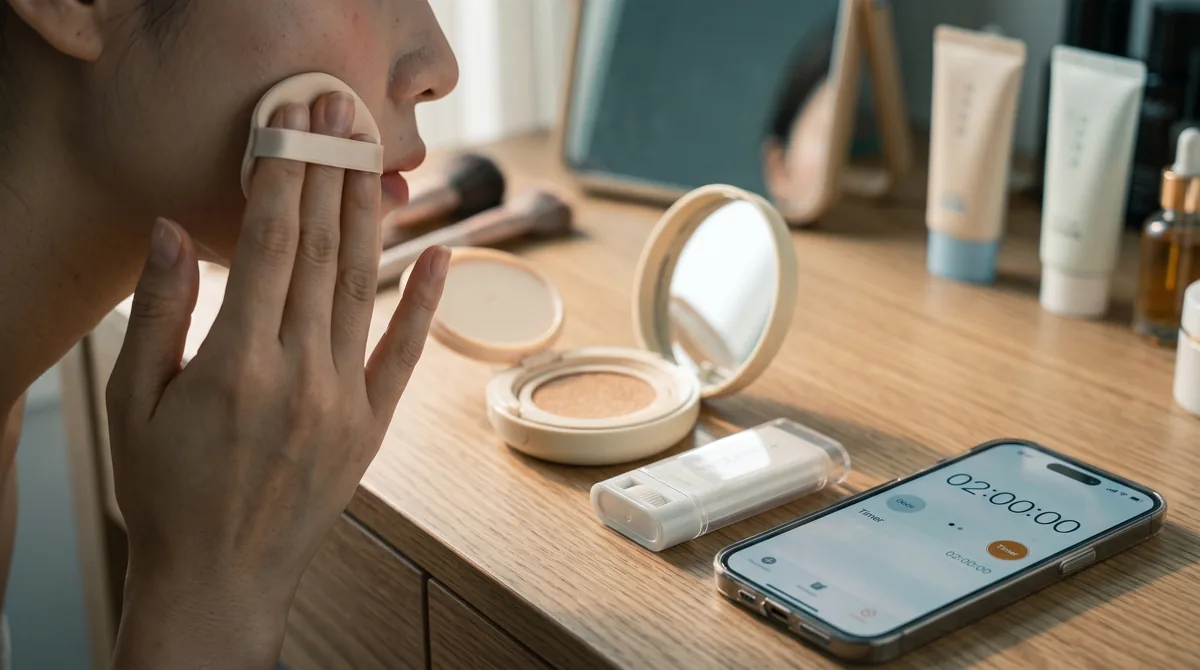
Reapply every 2 hours outdoors using a cushion SPF, stick SPF, or SPF powder — and press, don’t rub. Rubbing disturbs makeup and moves the SPF film unevenly across your skin.
Cushions and sticks are the Korean market’s answer to reapplication because they lay down product without stripping foundation. A quick pass across the high points — forehead, nose bridge, cheekbones, chin — is where sun hits hardest and where reapplication matters most. SPF mists exist, but treat them as a top-up, not a primary reapply; it’s hard to get an even, protective layer from a spray alone.
Indoors, if you’re not next to a window, one reapply around lunch is usually enough. UVA does pass through window glass, so a desk by a sunny window still counts as “exposed.”
Korean vs Western SPF
Is Korean sunscreen different from Western sunscreen?
The main differences are filter options and texture, not the level of protection at a given SPF number. Korean sunscreens can use newer-generation UV filters (like Uvinul A Plus, Tinosorb S, and Iso-Amyl p-Methoxycinnamate) that aren’t yet approved in the US, which is why many feel lighter and more elegant.
Here’s a quick comparison of what tends to differ:
| Factor | Korean sunscreens | Western (US) sunscreens |
|---|---|---|
| Common filters | Newer organic filters (Uvinul, Tinosorb) | Older-gen filters or mineral (zinc, titanium) |
| Texture | Often watery, milky, or gel-like | Often thicker or chalkier |
| UVA labeling | PA+ to PA++++ system | Broad Spectrum (pass/fail) |
| Finish | Dewy or semi-matte, low white cast | More variable; mineral options can be white |
Look for PA++++ for high UVA protection, and remember: a sunscreen you’ll actually reapply beats a heavier one you avoid. For US-approved options with a similar feel, mineral-organic hybrids and lightweight fluids get closest.
Common mistakes
What are the most common Korean sunscreen mistakes?
The biggest mistake is under-applying, followed by skipping the reapply. Both quietly halve your protection without changing how the product feels.
A few more to watch for:
- Applying SPF before moisturizer has settled — causes pilling and streaks.
- Mixing sunscreen with foundation in your palm — dilutes the SPF film.
- Only doing the cheeks and forehead — neck, ears, and eyelids burn too.
- Trusting “SPF in makeup” alone — foundation rarely delivers a full protective dose.
- Assuming cloudy days are safe — UVA passes through clouds year-round.
If you fix only two things this week, make it the amount and the reapply. Everything else is polish.
Frequently Asked Questions
Q. Can I use Korean sunscreen every day, even indoors?
A. Yes — daily use is the point. Indoors away from windows you can use a lighter amount, but UVA passes through glass, so a desk by a window still needs SPF.
Q. Does SPF in my foundation count as sun protection?
A. Not on its own. You’d need to apply about seven times the normal foundation amount to reach the label SPF, so treat makeup SPF as a bonus, not a base layer.
Q. Should I use chemical or mineral Korean sunscreen?
A. Both work if applied at the right amount. Chemical (organic) filters tend to feel lighter and layer better under makeup; mineral options are calmer for very reactive or post-procedure skin.
Q. How do I reapply without ruining my makeup?
A. Use a cushion SPF or SPF stick and press it in with a sponge or fingertips. Skip rubbing and skip sprays as your only reapply — they’re hard to distribute evenly.
Q. What SPF and PA level should I look for?
A. For daily wear, SPF 30-50 with PA+++ or PA++++ covers most needs. Higher isn’t dramatically better; consistent, correct application matters more than chasing a bigger number.
Korean sunscreen application isn’t complicated — it’s the amount and the reapply that decide whether your SPF 50 acts like SPF 50 or SPF 15. Use a full quarter-teaspoon, make it your last morning skincare step, and top up every two hours when you’re outside. This is educational guidance, not medical advice; if you have photosensitivity or are post-procedure, follow your dermatologist’s plan. Curated, tested, and explained — so you can build a routine you’ll actually keep.