If your skin feels tight ten minutes after cleansing and looks flaky by noon, you likely have a dehydrated skin winter routine problem — not a dry skin type. The fix is layered hydration in the right order, not more products. Below is the verdict, the routine, and the honest trade-offs so you can decide what to keep.
Dry vs dehydrated
Is your skin dry or just dehydrated in winter?
Dry is a skin type (low oil, lifelong); dehydrated is a condition (low water, temporary). You can be oily and dehydrated at the same time — that shiny T-zone with tight cheeks is the classic winter tell.
Signs to check in the mirror:
| Signal | Dry skin (type) | Dehydrated skin (condition) |
|---|---|---|
| Feel after cleansing | Tight, rough, always | Tight for 10-20 min, then eases |
| Oil production | Low year-round | Normal or high, can be oily |
| Fine lines | Deeper, static | Surface crepe when you smile |
| Flaking | Persistent patches | Powdery, especially around nose |
| Fix direction | Add lipids (ceramides, squalane) | Add water + humectants first |
If most of your “yes” answers are on the right, you don’t need heavier oils — you need water bound into the skin and then sealed in.
The core routine
What is the best 4-step winter routine for dehydrated skin?
Keep it short: gentle cleanse → hydrating toner → hydrating essence or serum → moisturizer. In the morning, add sunscreen; at night, add a balm or sleeping mask only if needed.
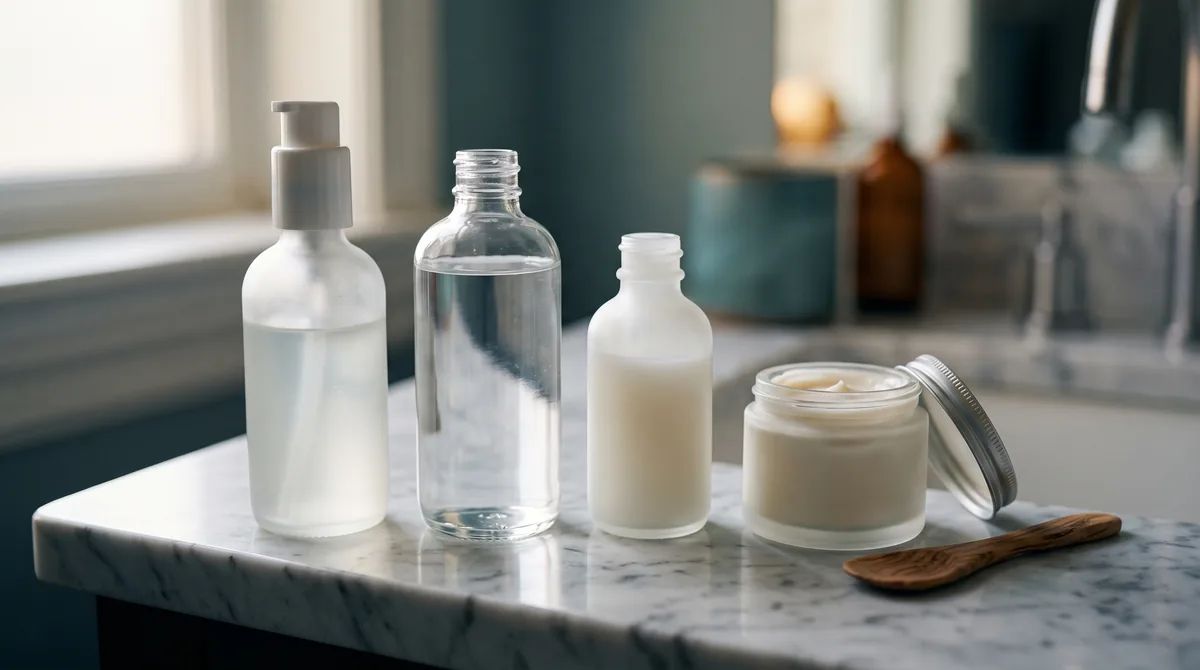
Here’s how each step actually earns its place:
- Cleanser (AM/PM): Low-pH, non-foaming or gel. Skip anything that squeaks. A cleanser that strips your skin undoes every step after it.
- Hydrating toner: Look for glycerin, panthenol, or hyaluronic acid near the top of the INCI list. Press 2-3 layers onto damp skin with your palms — this is the “7-skin” idea, scaled down.
- Essence or serum: Choose one, not both. Hyaluronic acid + panthenol for pure hydration; polyglutamic acid if HA alone feels flat by afternoon.
- Moisturizer: In winter, pick a cream with both humectants and a small occlusive layer (shea, squalane, or petrolatum in trace amounts). This is what stops the water from evaporating.
Honest limit: this routine works if you use it consistently on damp skin. Applying to bone-dry skin at 11pm is why most people say “hydrating products don’t work on me.”
Ingredients that matter
Which ingredients actually hydrate skin in cold weather?
The short answer: humectants pull water in, emollients smooth, occlusives lock it in — you need all three in winter, not just one. Chasing a single “hero” ingredient is the most common mistake.
A practical shopping shortlist:
| Role | Ingredients to look for | Where it fits |
|---|---|---|
| Humectant | Glycerin, hyaluronic acid, panthenol (B5), betaine, polyglutamic acid | Toner, essence, serum |
| Barrier/emollient | Ceramides (NP, AP, EOP), cholesterol, squalane, madecassoside | Cream, sleeping mask |
| Occlusive | Shea butter, petrolatum (small %), lanolin alternatives | Night cream, balm on cheeks |
| Soothing | Centella asiatica, panthenol, allantoin, madecassoside | Any step, especially if red |
Cross-check the INCI list on the brand’s official page — the first five ingredients tell you what the product actually does. A “hyaluronic acid serum” that lists water, alcohol denat., and butylene glycol before the HA is mostly a delivery system with very little HA.
Actives on tight days
Should you use retinal or acids on flaky, tight skin?
Not this week. When the barrier is compromised, strong actives sting more and work less. Pull them back until skin stops feeling tight after cleansing — usually 5-10 days of the core routine above.
A gentler cold-weather approach:
- Pause: High-% AHA/BHA, prescription retinoids, benzoyl peroxide, strong vitamin C (>10% L-ascorbic).
- Keep, at lower cadence: Retinal or retinol 1-2x/week instead of nightly; PHA instead of AHA.
- Add back slowly: Reintroduce one active at a time, on top of a hydrated, moisturized base — never on freshly cleansed dry skin.
This isn’t a “clean beauty” argument; actives are useful. It’s a timing argument: repair first, treat later.
Sunscreen in winter
Do you still need sunscreen for dehydrated skin in winter?
Yes — UVA passes through clouds and windows year-round, and photoaging is cumulative. Pick a cushiony, hydrating SPF 30-50 formula so it doesn’t fight your routine.
What to look for on the label:
- Broad-spectrum, SPF 30+ (Korean and EU sunscreens often list PA++++ for UVA).
- Hydrating base: glycerin, panthenol, or hyaluronic acid in the first half of the INCI list.
- Skip if it stings: Denatured alcohol high on the list can worsen tightness.
- Reapply reality check: Once in the morning is better than none; twice is better than once. Don’t let “perfect reapplication” stop you from wearing it at all.
Note: this is educational content, not medical advice. If you have a skin condition, check with a dermatologist before adjusting your routine.
Frequently Asked Questions
Q. How long until a winter routine actually shows results on dehydrated skin?
A. Most people see less tightness within 3-5 days and visibly plumper skin around 2-4 weeks. Barrier repair takes about one skin cycle (~28 days), so give it a month before judging.
Q. Can I use hyaluronic acid alone without a moisturizer on top?
A. No — in dry winter air, HA can pull water **out** of your skin if there’s nothing sealing it in. Always follow HA with a cream or occlusive layer.
Q. Is a sleeping mask necessary every night?
A. No. Use one 2-3 nights a week when skin feels tight, or on flight/heater-heavy days. Nightly can feel heavy and isn’t needed for most skin types.
Q. My skin is oily but tight — do I still need cream in winter?
A. Yes, a lightweight gel-cream. Oily + dehydrated skin gets worse without a sealing step because water evaporates faster than oil compensates.
Q. Does drinking more water fix dehydrated skin?
A. It helps overall health, but topical hydration and a working barrier do the heavy lifting. Water intake alone won’t stop transepidermal water loss.
The bottom line: a dehydrated skin winter routine is about order and consistency, not more steps. Layer humectants on damp skin, seal with a proper cream, keep sunscreen non-negotiable, and shelve strong actives until the tightness is gone. Curated, tested, and explained — so you can build a routine you’ll actually keep. Honest limit: I can’t promise a fix in 48 hours, and if flaking comes with itching, burning, or rash, that’s a dermatologist question, not a skincare-swap question.