Air conditioning dry skin is what happens when a cool, low-humidity office quietly pulls water out of your face all day. The fix is not a richer cream — it is water first, then a light seal, layered thin. Below, a K-beauty routine you can actually keep at your desk, plus honest limits on what a mist, a humidifier, or a sheet mask can really do.
Why it happens
Why does air conditioning dry out your skin?
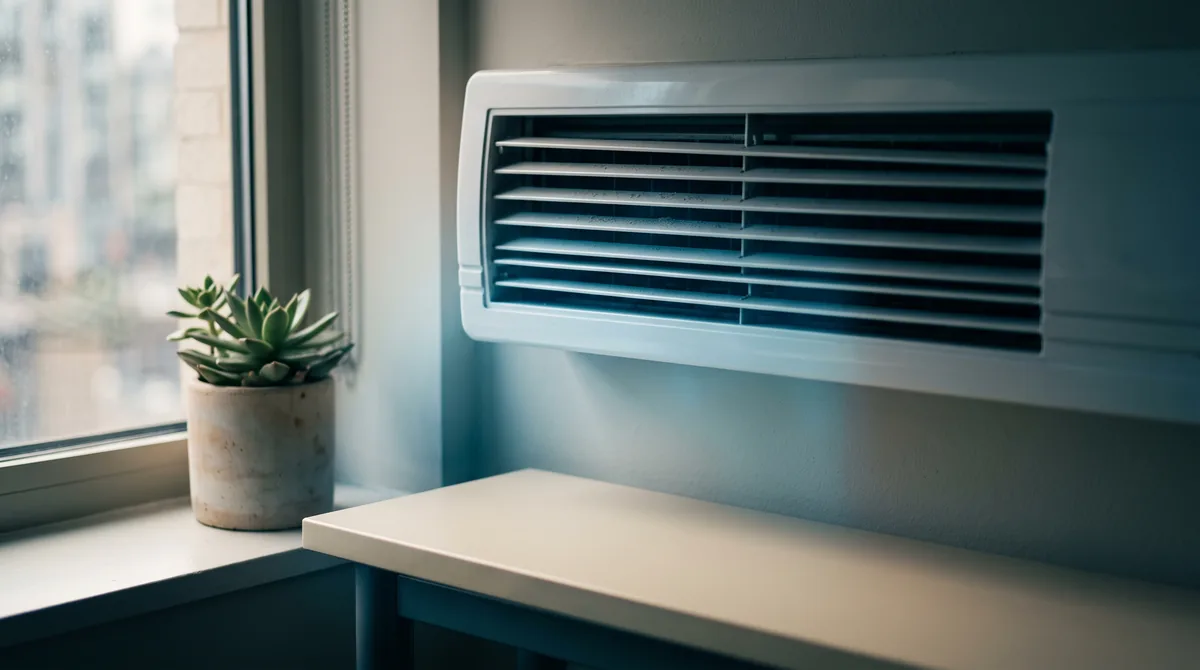
Air conditioners cool a room by condensing water vapor out of the air, so indoor humidity drops well below what your skin’s outer layer prefers. The EPA’s indoor air guidance recommends keeping indoor humidity between roughly 30-60%, and most air-conditioned offices sit at the low end of that range.
Your stratum corneum — the outermost skin layer — behaves like a sponge. When the surrounding air is drier than the skin, water diffuses outward (transepidermal water loss). You do not “feel” it happening, but by 3 p.m. the tight cheeks, dull texture, and makeup that clings to dry patches are all the same signal: you lost water, not oil.
This is why oily and combination skin get caught out. AC-dry skin is often dehydrated (low water) while still oily (normal sebum). Piling on a heavy cream can trigger congestion without fixing the water issue.
The core routine
What is the best skincare routine for air-conditioned offices?
The short version: thin water layers first, then a light occlusive to trap them. Korean skincare’s “essence → serum → moisturizer” order is designed for exactly this — small doses of humectants, one on top of the next, so each layer can absorb before the next.
A simple AM routine for AC skin: 1. Gentle low-pH cleanser (skip the squeaky-clean feeling). 2. Hydrating toner or essence with glycerin, panthenol, or hyaluronic acid — press in with palms. 3. Lightweight serum (5-star humectants: sodium hyaluronate, beta-glucan, panthenol). 4. Gel-cream moisturizer — enough to sit on top without pilling. 5. SPF 30+ broad-spectrum sunscreen.
At PM, swap the gel-cream for a slightly richer sleeping mask 2-3 nights a week. Products like Laneige Water Sleeping Mask are built around this “seal in water overnight” idea, per the brand’s product page.
Honest limit: this routine assumes a healthy barrier. If your skin is stinging or flaking, drop actives entirely for a week and just do cleanser → hydrating toner → cream → SPF.
Mist vs humidifier
Humidifier vs face mist — which actually helps AC dry skin?
| Tool | What it does | Best for | Honest limit |
|---|---|---|---|
| Humidifier | Raises room humidity to ~40-60% RH | All-day desk work, sleep | Needs cleaning weekly; only works in your immediate space |
| Face mist (water-only) | Wets the surface briefly | A quick refresh | Evaporates in minutes and can worsen dryness if there’s nothing to seal it |
| Mist with humectants | Adds glycerin/HA to the skin | Reapplying over makeup | Still needs a light balm on top to hold moisture |
| Sheet mask | 15-min humectant soak | Reset after a long AC day | Single-use; not a daily fix |
If you can only pick one, get a small desk humidifier and aim for 40-60% RH on a cheap hygrometer. A mist without a follow-up occlusive is closer to a mood-booster than a hydration tool — the water leaves, and it often takes some of your skin’s water with it.
Under makeup
How do you keep hydrating layers under makeup without pilling?
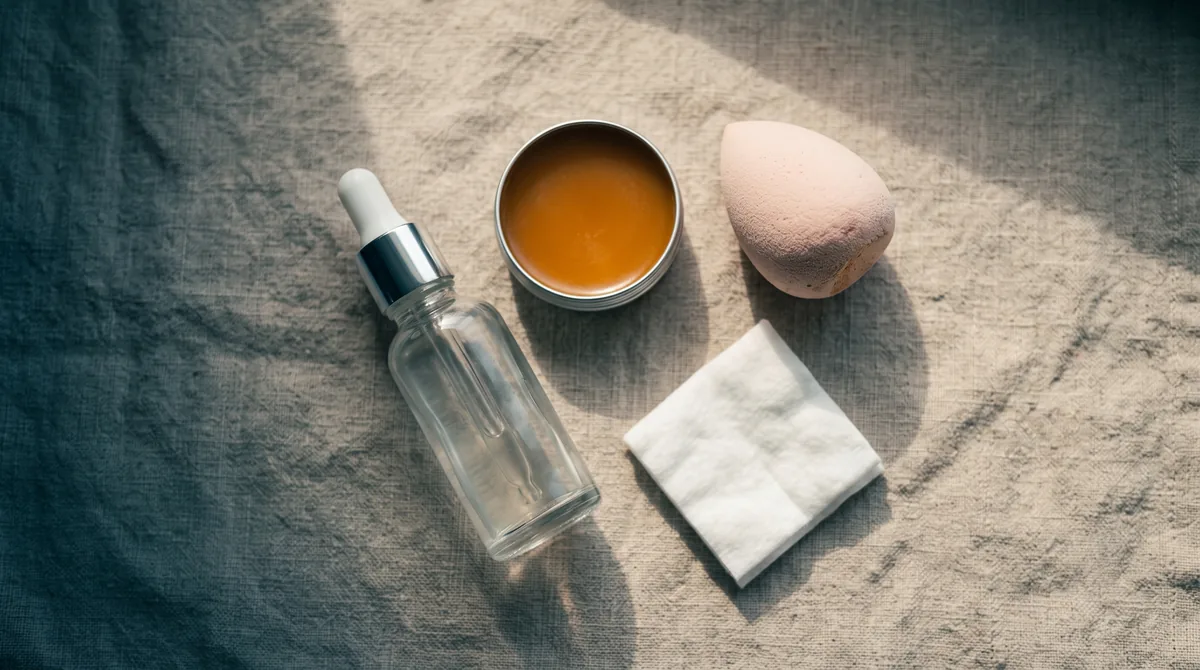
Pilling happens when a silicone-heavy product sits on top of a wet, un-absorbed layer. To avoid it: fewer layers, more waiting, and match textures (water with water, oil with oil).
A pre-makeup stack that works under AC: – Hydrating toner, pressed in (not wiped). – One humectant serum — 3-4 drops, wait 60 seconds. – Gel-cream, pea-sized, patted not rubbed. – Optional: a tiny dab of occlusive balm on cheekbones only (where AC hits hardest). – SPF, then makeup after 2-3 minutes.
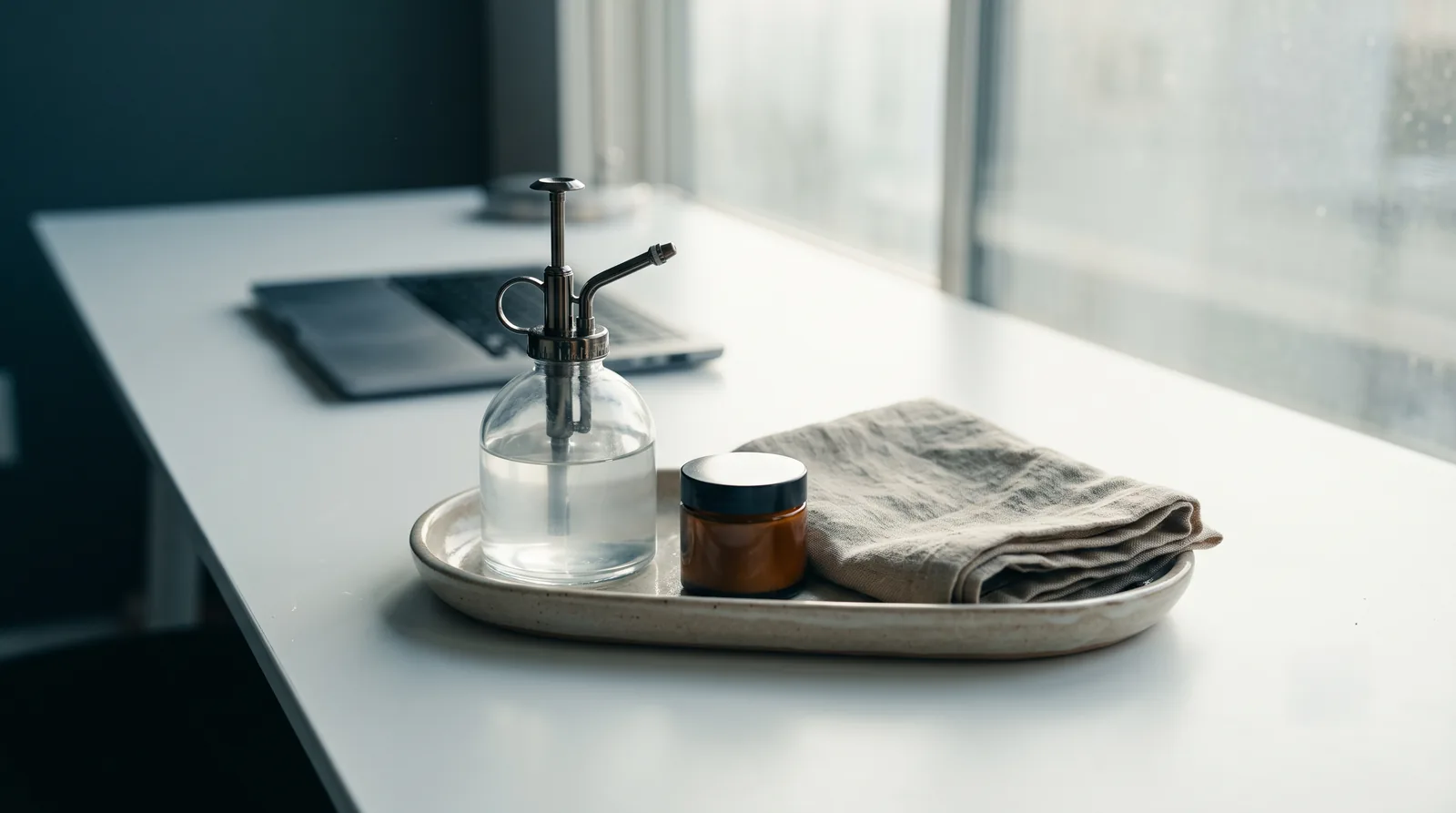
For midday, keep a humectant mist and a small balm at your desk. Mist first, press in with clean fingers, then tap the balm only on dry cheeks. Powder — if you need it — goes on last, and sparingly.
What to skip
What ingredients should you skip on air-conditioned days?
When your barrier is already losing water, strong actives make it worse. On days your skin feels tight, skip:
- High-percentage AHAs/BHAs (glycolic, salicylic above ~2%) — they can thin an already stressed barrier.
- Strong retinoids — pause for a night or two; restart at a lower frequency.
- Denatured alcohol high on the INCI list in toners — fine for oily skin normally, drying under AC.
- Fragrance-heavy essences — not “toxic,” just a common irritant when the barrier is compromised.
This is not ingredient fear-mongering. Actives are useful; the point is timing. Use them on well-hydrated skin, not on a Wednesday afternoon in a 21°C office.
Frequently Asked Questions
Q. Can air conditioning cause acne, not just dryness?
A. Indirectly, yes. Dehydrated skin can overproduce oil to compensate, and heavy creams layered on top can clog pores. Fix the water level first with light humectants, and only then judge whether you have an oil problem.
Q. Is drinking more water enough to fix AC dry skin?
A. Hydration from the inside supports overall skin health, but it will not overcome ongoing water loss to a dry room. You still need topical humectants plus a light seal, or a humidifier to change the room itself.
Q. How often should I use a sheet mask in an air-conditioned office?
A. 2-3 times a week is plenty for most skin types. Daily use is not harmful, but it is not more effective than a solid daily routine — sheet masks are a boost, not a base.
Q. Does a thicker cream fix dehydrated skin faster?
A. Not usually. A thick cream without underlying water layers just sits on the surface. Layer a humectant essence or serum first, then use a moisturizer heavy enough to seal it in.
Q. Should I change my routine when I move between AC and hot outdoor air?
A. Keep the base the same, and adjust the last step. Use a lighter gel-cream on hot commutes and a slightly richer moisturizer once you’re back at your desk. Reapply SPF every 2 hours if you’re in and out.
Air-conditioned skin is a humidity problem with a humidity answer: raise the water in your skin (and the room, if you can), then trap it with something light. Curated, tested, and explained — so you can build a routine you’ll actually keep, whether you’re at a desk all day or moving between climates. This is educational, not medical advice, and results will vary with your skin type, environment, and consistency.