If your skin suddenly stings when you apply moisturizer, feels tight after cleansing, or reacts to products it used to love, your skin barrier is likely compromised. Skin barrier repair is not about buying more products — it’s about pausing actives, using ceramide-led moisturizers, and giving skin 2-6 weeks to rebuild. Here’s what to look for, and a calm K-beauty routine that actually helps.
Damage signs
What are the signs of a damaged skin barrier?
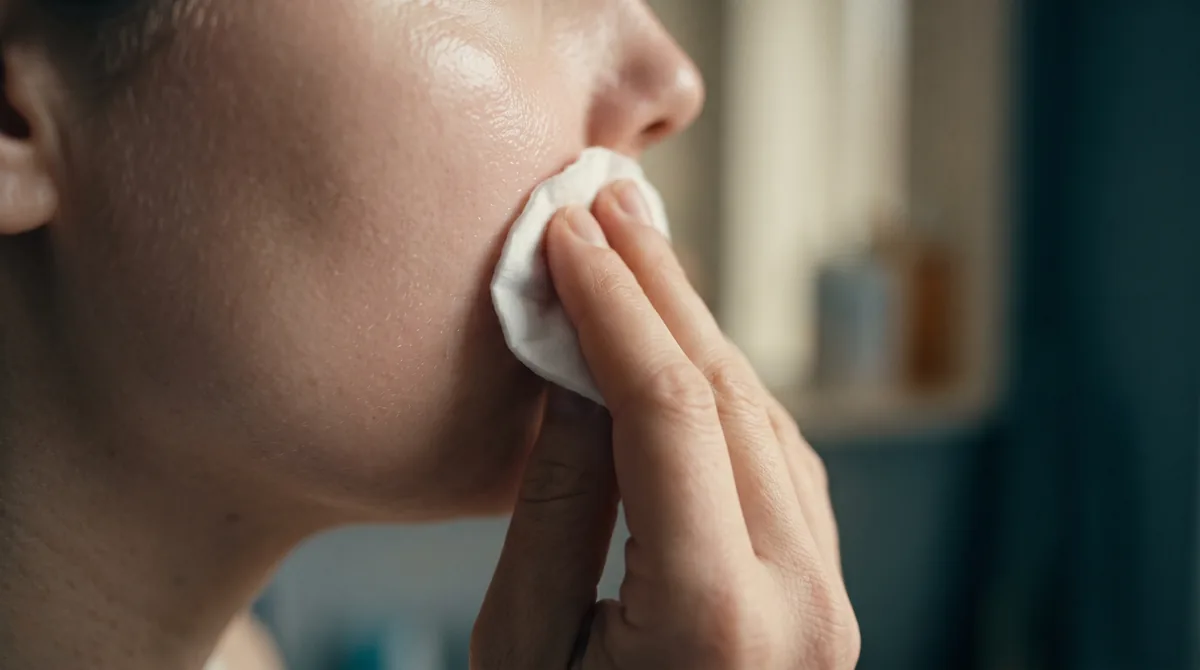
A damaged barrier usually announces itself as tightness after cleansing, stinging when you apply serums, and new sensitivity to products you tolerated before. It’s less about dramatic redness and more about a persistent “off” feeling.
Common signs, per dermatology references and my own client notes:
- Tight, “shrink-wrapped” feeling within a minute of rinsing your face.
- Stinging or burning on applying hydrating toner or essence — even gentle ones.
- Dull, papery flakes that don’t scrub away and get worse with exfoliation.
- Sudden reactivity: a moisturizer you’ve used for months now feels itchy.
- Uneven texture and slow healing of small spots.
If you also see oozing, honey-crusted lesions, or a spreading rash, that’s beyond a cosmetic barrier issue — see a dermatologist. Skincare is educational, not medical advice.
What actually helps
What ingredients actually repair the skin barrier?
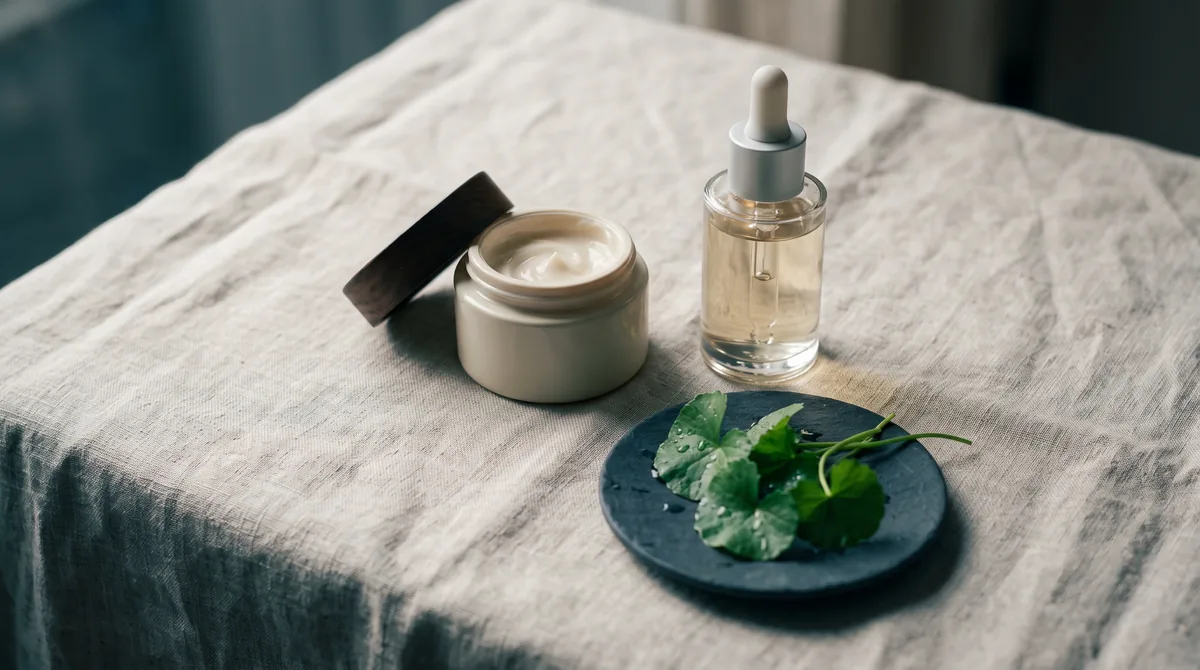
The barrier is a mortar-and-brick system: ceramides, cholesterol, and free fatty acids hold your skin cells together. A repair-focused product replenishes those exact lipids rather than just sitting on top as an occlusive.
What to look for on the INCI list:
| Ingredient | What it does | Notes |
|---|---|---|
| Ceramides (NP, AP, EOP) | Rebuild the lipid matrix | Best paired with cholesterol + fatty acids |
| Cholesterol | Structural lipid | Often listed lower on INCI |
| Panthenol (Vitamin B5) | Soothes, supports repair | 2-5% is common in K-beauty |
| Centella asiatica / madecassoside | Calms visible redness | Widely used in “cica” lines |
| Glycerin, hyaluronic acid | Draw water into skin | Foundational humectants |
| Squalane | Skin-identical emollient | Non-comedogenic for most |
Skip, for now: retinoids, AHAs/BHAs, high-strength vitamin C, benzoyl peroxide, and anything with fragrance or denatured alcohol high on the list. They’re not “bad” — they’re just wrong for a stressed barrier.
For an authoritative primer on barrier lipids, the American Academy of Dermatology is a solid, non-commercial reference.
Gentle daily routine
What does a K-beauty barrier repair routine look like?
Keep it to four steps, twice a day. More layers won’t speed repair, but the wrong ones will slow it.
AM routine 1. Rinse with lukewarm water only, or use a low-pH gel cleanser (pH 5.5 or lower). 2. Hydrating toner or essence with glycerin, panthenol, or Centella. Pat in with hands. 3. Ceramide-led moisturizer. A pea-sized amount is enough. 4. Broad-spectrum SPF 30-50, mineral or hybrid if chemical filters sting.
PM routine 1. Gentle cream or oil cleanser (skip double-cleansing if it dries you out). 2. Same hydrating toner/essence. 3. Barrier cream, slightly more generously than AM. 4. Optional: a thin layer of squalane or an occlusive balm on driest zones (“slugging” light).
What to leave out for 2-4 weeks: exfoliating acids, retinol, vitamin C serums, clay masks, physical scrubs, and any “brightening” or “resurfacing” product. Reintroduce one at a time, starting at half the previous frequency.
Timeline & fit
How long does barrier repair take, and who should skip which step?
Expect noticeable calm in 1-2 weeks and full repair in 4-6 weeks, assuming you stop the aggravating products. If nothing improves in 3-4 weeks, the issue may be perioral dermatitis, rosacea, or eczema — not a simple barrier issue — and that’s a dermatologist visit.
Who should adjust the routine:
- Oily or acne-prone skin: skip the occlusive last step; a light ceramide gel-cream works better than a heavy balm.
- Very dry or mature skin: layer a facial oil (squalane, jojoba) between moisturizer and SPF.
- Fragrance-sensitive skin: choose fragrance-free versions, even of “gentle” cica products — essential oils can still sting a compromised barrier.
- Budget-conscious: a good ceramide moisturizer plus SPF is 80% of the benefit. You don’t need a 10-step routine.
Honest limitation: barrier products won’t erase wrinkles, fade dark spots, or clear active acne. They restore the foundation so those other goals become possible again later.
Frequently Asked Questions
Q. Can I use retinol while repairing my skin barrier?
A. No — pause retinol for at least 2-4 weeks. Reintroduce at half your previous frequency once stinging and tightness are gone.
Q. Is slugging with petroleum jelly good for barrier repair?
A. It can help very dry skin by sealing in moisture overnight, but it’s occlusive only — pair it with a ceramide moisturizer underneath, and skip it if you’re acne-prone.
Q. Does drinking more water repair the skin barrier?
A. Hydration supports overall skin health, but water intake alone won’t rebuild lipids. Topical ceramides and reducing irritants do the real work.
Q. Can I still wear makeup during barrier repair?
A. Yes, but keep it minimal, skip long-wear or matte formulas that dry the skin, and remove it with a gentle cream cleanser rather than makeup wipes.
Q. When should I see a dermatologist instead of adjusting my routine?
A. If you see oozing, spreading rash, persistent burning after 3-4 weeks of a gentle routine, or symptoms tied to a specific area (around the mouth, eyelids), book a professional visit. Skincare is not a substitute for medical care.
A damaged skin barrier is one of the most common — and most fixable — skincare problems, but the fix is counterintuitive: do less, choose ceramide-led products, and give it time. If your skin is calm in 2 weeks and comfortable in 6, the routine worked. If it’s not, that’s a signal to see a professional, not to add more products. Curated, tested, and explained — so you can build a routine you’ll actually keep. Honest limit: results vary with skin type, climate, and consistency, and none of this replaces medical advice.