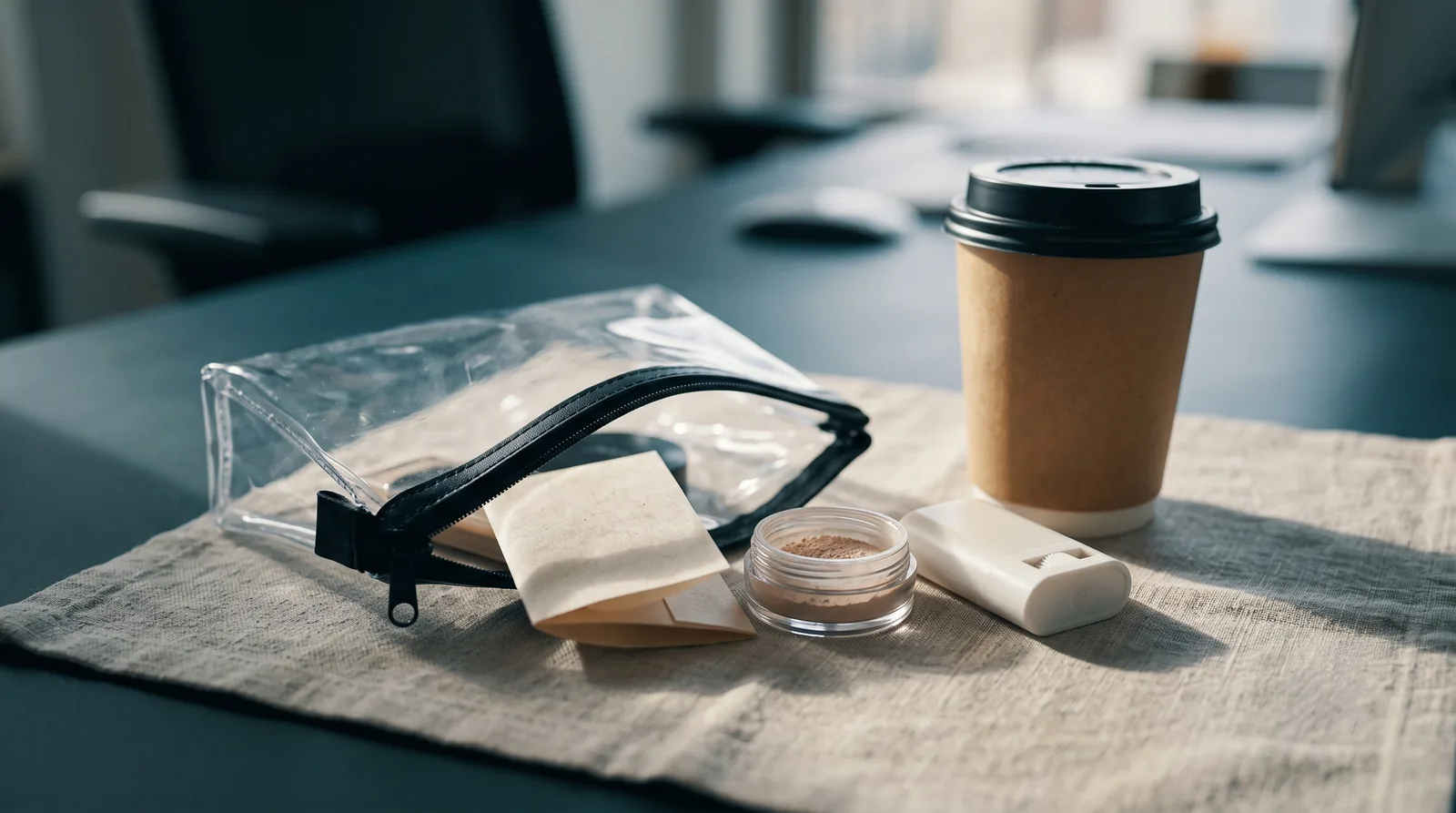
If your T-zone is glossy by 2 PM, the fix isn’t another wash — it’s a two-minute reset. Good midday shine control blots excess sebum, adds a whisper of powder, and re-layers sunscreen without smearing what you already have on. Rewashing at midday strips your barrier and usually makes oil come back faster.
The 2 PM problem
Why does your face get shiny by midday even after a full routine?
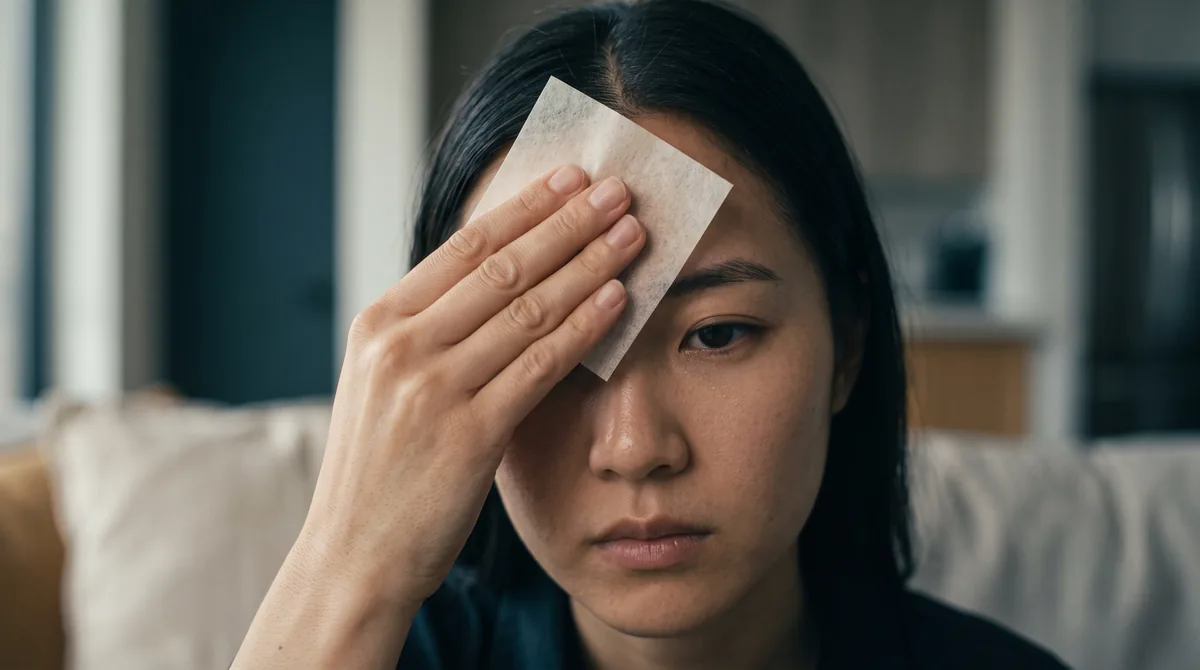
By afternoon, your sebaceous glands have been active for hours and your morning sunscreen has partially settled into the skin. That combination — fresh sebum on top of a warm, worked-in SPF film — is what you see as shine. It’s normal, not a sign your routine failed.
Heat and humidity accelerate sebum flow, and so does friction from masks, phones, and hands. Stripping cleansers or over-exfoliation can actually increase oil production by triggering rebound sebum. The goal at 2 PM is to remove the excess, not the barrier.
Blot vs. powder
Blotting paper vs. powder shine control: which should you use first?
Use blotting paper first, powder second — and only if you still need it. Paper absorbs oil without adding product; powder sets what remains and diffuses light. Doing it in reverse cakes powder into wet oil and looks patchy within minutes.
Press the paper flat against the T-zone for 3-5 seconds — don’t drag it. Then, if shine returns quickly, tap a translucent, talc- or silica-based powder like Innisfree’s No Sebum Mineral Powder only on the forehead, nose, and chin. Leave the cheeks alone unless they shine too.
| Tool | Best for | Trade-off |
|---|---|---|
| Blotting paper | Any skin type, any time | Removes oil only; no coverage |
| Loose translucent powder | Oily T-zone, long days | Can look dry on dehydrated skin |
| Oil-control pressed powder | On-the-go touch-ups | Heavier; can cake over sunscreen |
| Toner pad (wipe-off) | Post-workout reset | Can disturb SPF; reapply after |
Keep your SPF alive
How do you touch up without ruining your sunscreen?
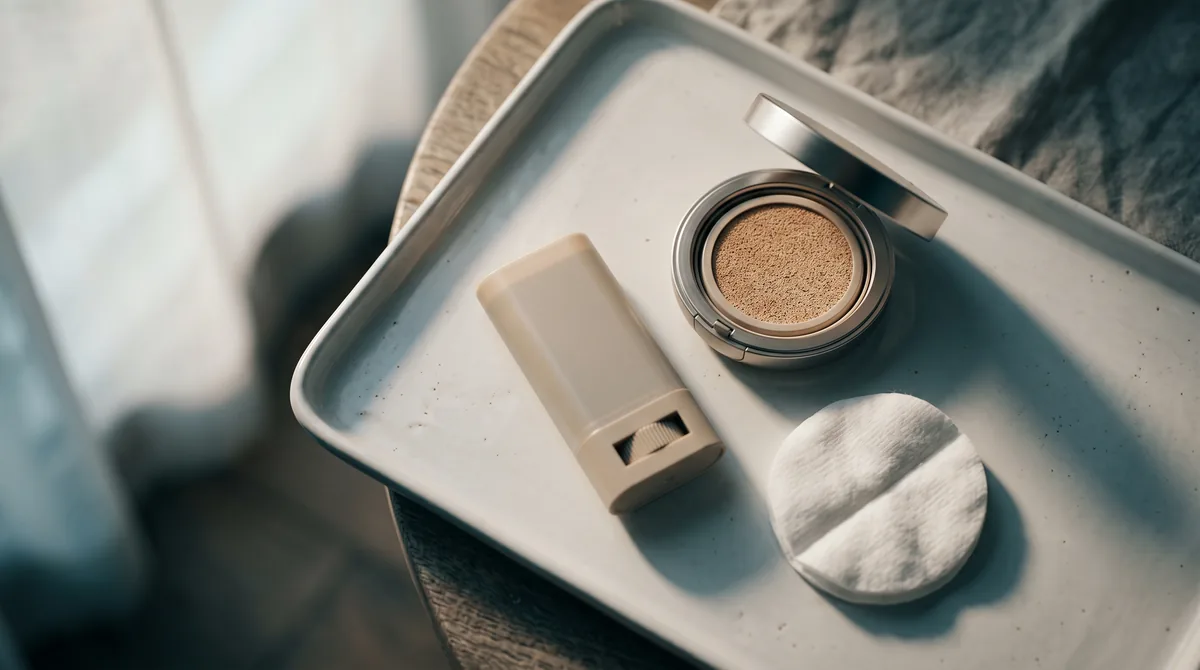
Reapply sunscreen with a stick or cushion, not a lotion, so you’re layering rather than smearing. Sticks glide over powder without lifting it; cushions tap SPF back on in a controlled amount. Both are common in Korean routines specifically because they survive midday touch-ups.
For sticks, sweep two passes across the high points — forehead, cheekbones, nose bridge — then press in with clean fingertips. A well-formulated option is the Beauty of Joseon Matte Sun Stick Rice + Rosemary SPF50+ PA++++, which uses a mattifying finish that layers cleanly over powder. If you prefer a cushion, tap — never swipe — so you don’t drag the layer underneath.
One honest limit: no touch-up gives you a full “reapplication dose” of SPF the way a morning application does. Treat midday reapplication as maintenance, and plan shade or a hat if you’ll be outside for hours.
Fix the cause, not just the shine
What’s the best long-term sebum control routine for an oily T-zone?
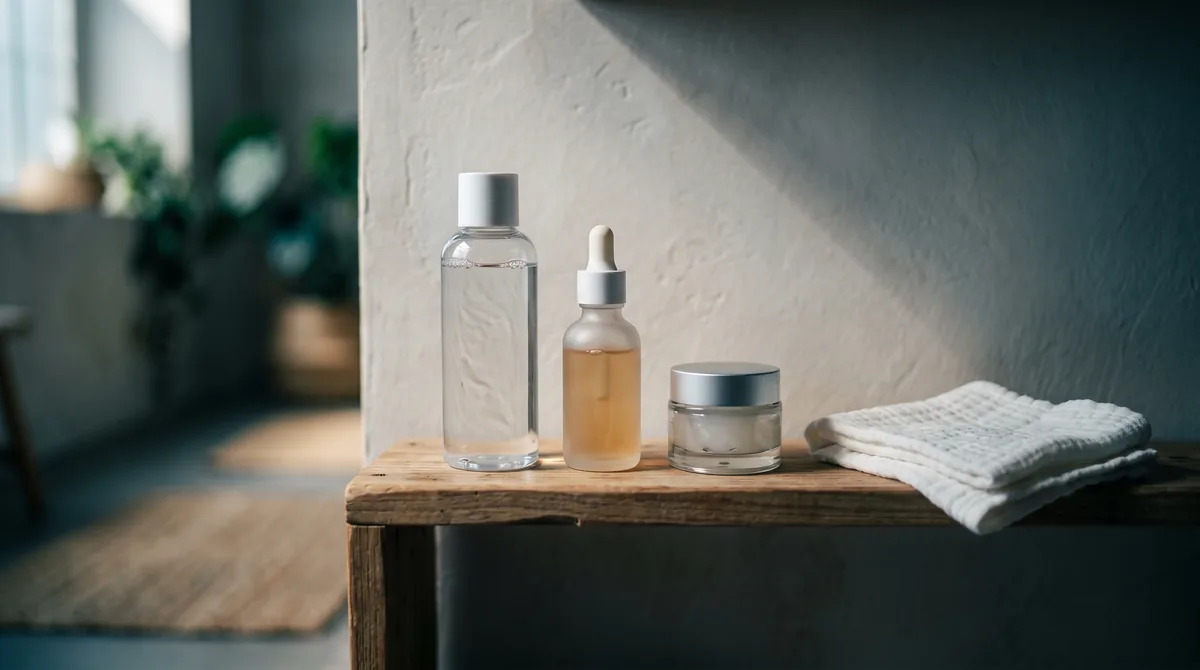
The most reliable ingredient for sebum control in Korean skincare is niacinamide at around 2-5%, which studies from cosmetic dermatology consistently associate with reduced sebum output over 4-8 weeks. Pair it with a gentle, low-pH cleanser AM and PM, and a lightweight gel or fluid moisturizer — even oily skin needs water, or it compensates with more oil.
A simple oily-T-zone summer routine looks like this:
- AM: low-pH cleanser → hydrating toner → niacinamide serum → gel moisturizer → SPF50+ (finish with a light powder if needed)
- PM: oil or balm cleanser → low-pH cleanser → hydrating toner → treatment (BHA 1-2x/week) → light moisturizer
Skip the urge to add a clay mask daily or double up on strong acids. Over-exfoliation is the fastest way to trade shine for irritation, and irritated skin often gets shinier, not calmer.
When to skip powder
When should you skip the touch-up entirely?
Skip powder if your skin feels tight, flaky, or stings — that’s dehydration, not oil, and powder will make it look worse. In that case, mist with a hydrating essence, press in with clean hands, and re-layer sun stick over damp (not wet) skin.
Also skip if you’re heading straight into a workout or a shower. There’s no point setting a layer you’re about to wash off. And if you’ve just applied a fresh treatment (retinal, strong acids) the night before, keep the midday routine minimal to avoid friction on sensitized skin.
Frequently Asked Questions
Q. Is it bad to wash my face at 2 PM if I’m really oily?
A. Yes, usually. A midday wash strips the barrier and can trigger rebound oil within an hour. Blot, lightly powder, and reapply SPF instead.
Q. Can I use setting spray for midday shine control?
A. Setting sprays can refresh makeup but don’t absorb oil on their own. Use blotting paper first, then a spray if you like the finish — and re-layer SPF afterward.
Q. Does drinking more water reduce facial oil?
A. Hydration helps overall skin health, but sebum is regulated by hormones and genetics, not hydration alone. Topical **niacinamide** and gentle cleansing have more direct effect on shine.
Q. Are mineral sunscreens better for oily skin?
A. Not necessarily — the finish matters more than the filter. A well-formulated chemical or hybrid SPF with a matte, non-comedogenic base often layers better over powder than a heavy mineral sunscreen.
Q. How often should I reapply sunscreen during the day?
A. Every 2 hours of direct sun exposure, per most dermatology guidelines. Indoors near a window, once around midday is usually enough for maintenance.
Midday shine is a normal signal from healthy sebaceous glands, not a routine failure. The right response is small: blot, lightly set, re-layer SPF, and treat the cause with niacinamide and gentle cleansing over weeks — not with an aggressive noon wash. Curated, tested, and explained — so you can build a routine you’ll actually keep. This is educational content, not medical advice, and results vary by skin type and climate.