If your dark spots looked faint in spring and suddenly turned stubborn, you’re dealing with summer pigmentation — melanin activated by UV, heat, and visible light stacking on top of old marks. The fix isn’t a new miracle serum; it’s a smarter routine built around sun protection, one gentle brightener, and calmer skin. Here’s the honest version, based on how Korean routines actually approach it.
Why summer worsens spots
Why do dark spots get darker in summer?
Summer pigmentation deepens because UVA, UVB, visible light, and infrared heat all trigger melanocytes to produce more pigment — and reapplied sunscreen is the single biggest lever. A morning SPF alone wears down within two to three hours of sweat and sebum, so unprotected hours are when new pigment forms.
Melasma and post-inflammatory hyperpigmentation (PIH) are especially heat-reactive. Even indoors, sitting near a bright window or cooking over a hot stove can nudge melanin activity. That’s why “I wear sunscreen every day” often isn’t enough by August — the issue is reapplication and heat exposure, not the SPF number on the bottle.
The three changes that worked
What are the three routine changes that actually help?
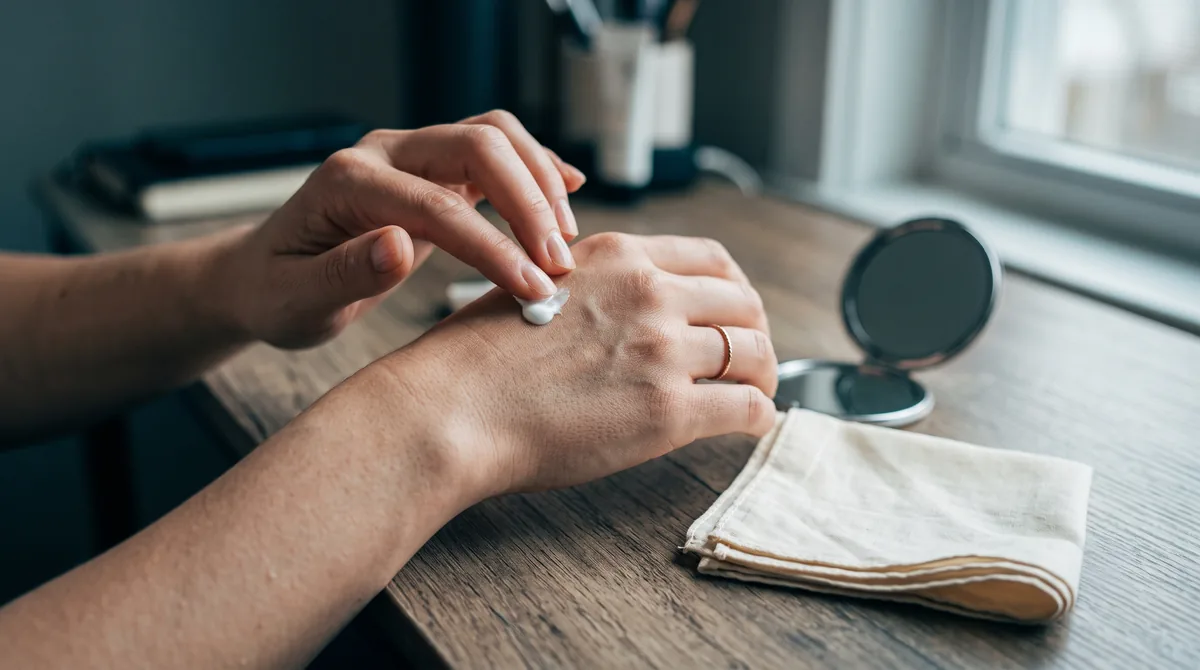
The three shifts that make a visible difference are reapplying sunscreen every two hours, adding one tyrosinase-inhibiting brightener at night, and physically cooling the skin after sun exposure. Not ten products — three habits.
- Reapply SPF every 2 hours outdoors. A stick or cushion SPF over makeup is realistic; a full re-cream is not. Aim for the equivalent of two finger-lengths for the face and neck each time.
- Add one PM brightener. Pick niacinamide (2-5%), alpha-arbutin (2%), or tranexamic acid (2-3%). One is enough — stacking three overnight tends to irritate, and irritation itself causes PIH.
- Cool the skin down. After being outside, rinse with lukewarm (not cold-shock) water, then use a chilled toner pad or a clean cotton pad soaked in refrigerated hydrating toner for 3-5 minutes. This calms the heat response that keeps melanocytes firing.
Actives that pull their weight
Which K-beauty ingredients actually fade summer pigmentation?
The evidence-supported brighteners in Korean formulas are niacinamide, alpha-arbutin, tranexamic acid, vitamin C derivatives, and azelaic acid — each working on a different step of melanin production. You don’t need all of them.
| Ingredient | Typical % | Best for | Notes |
|---|---|---|---|
| Niacinamide | 2-5% | Most skin types, PIH | Gentle, pairs well with almost anything |
| Alpha-arbutin | 2% | Sensitive skin, melasma | Slower but low irritation risk |
| Tranexamic acid | 2-3% | Melasma, stubborn spots | Newer topical use; keep patch-tested |
| Vitamin C (ascorbic / ethyl ascorbic acid) | 5-15% | AM antioxidant + brightening | Use in AM under sunscreen |
| Azelaic acid | 10% | Redness + pigment overlap | Can tingle; introduce slowly |
A realistic K-beauty stack: vitamin C serum in AM under sunscreen, and one PM brightener (niacinamide or alpha-arbutin) layered under moisturizer. That’s it. You can check any product’s exact INCI order on INCI Decoder before buying — the position of the active on the list tells you more than the marketing copy.
Sunscreen is the routine
How should you use sunscreen so pigmentation doesn’t come back?
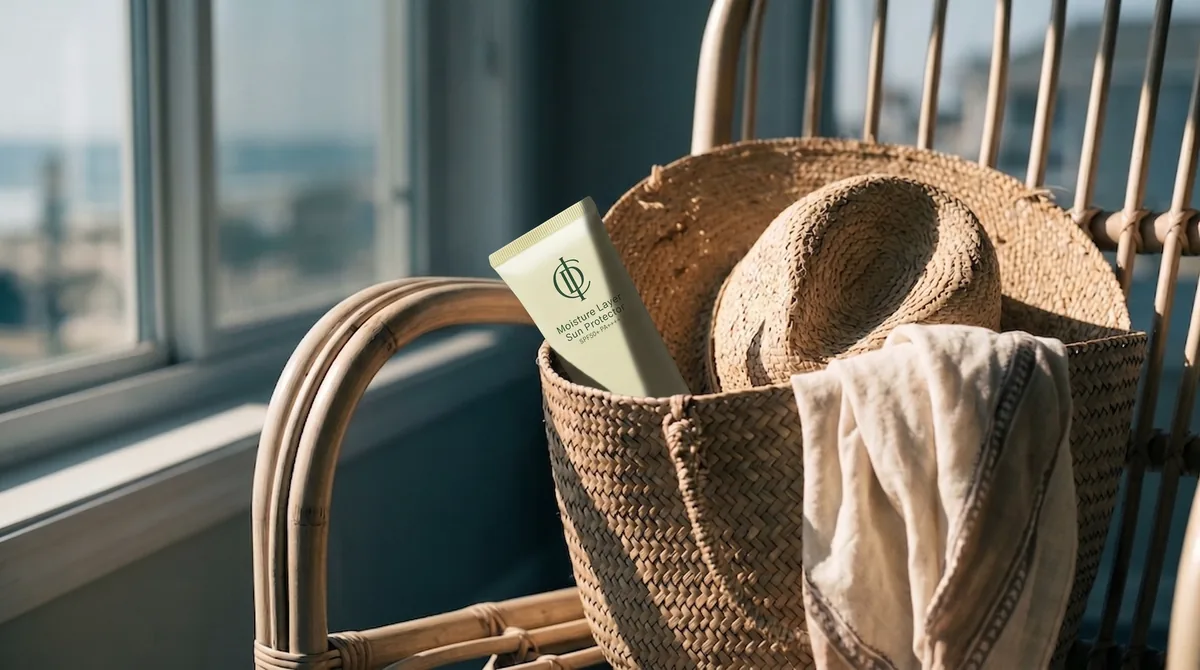
Sunscreen only works at the amount and frequency it was tested at, which is roughly 2 mg/cm² — about a quarter-teaspoon for the face — reapplied every two hours in direct sun. Anything less is a partial dose.
- AM base: a broad-spectrum SPF 50 PA++++ (Korean PA rating measures UVA; four pluses is the highest tier).
- Reapply: SPF stick, cushion, or spray over makeup. A stick is easiest for the nose, cheekbones, and hairline where sun hits hardest.
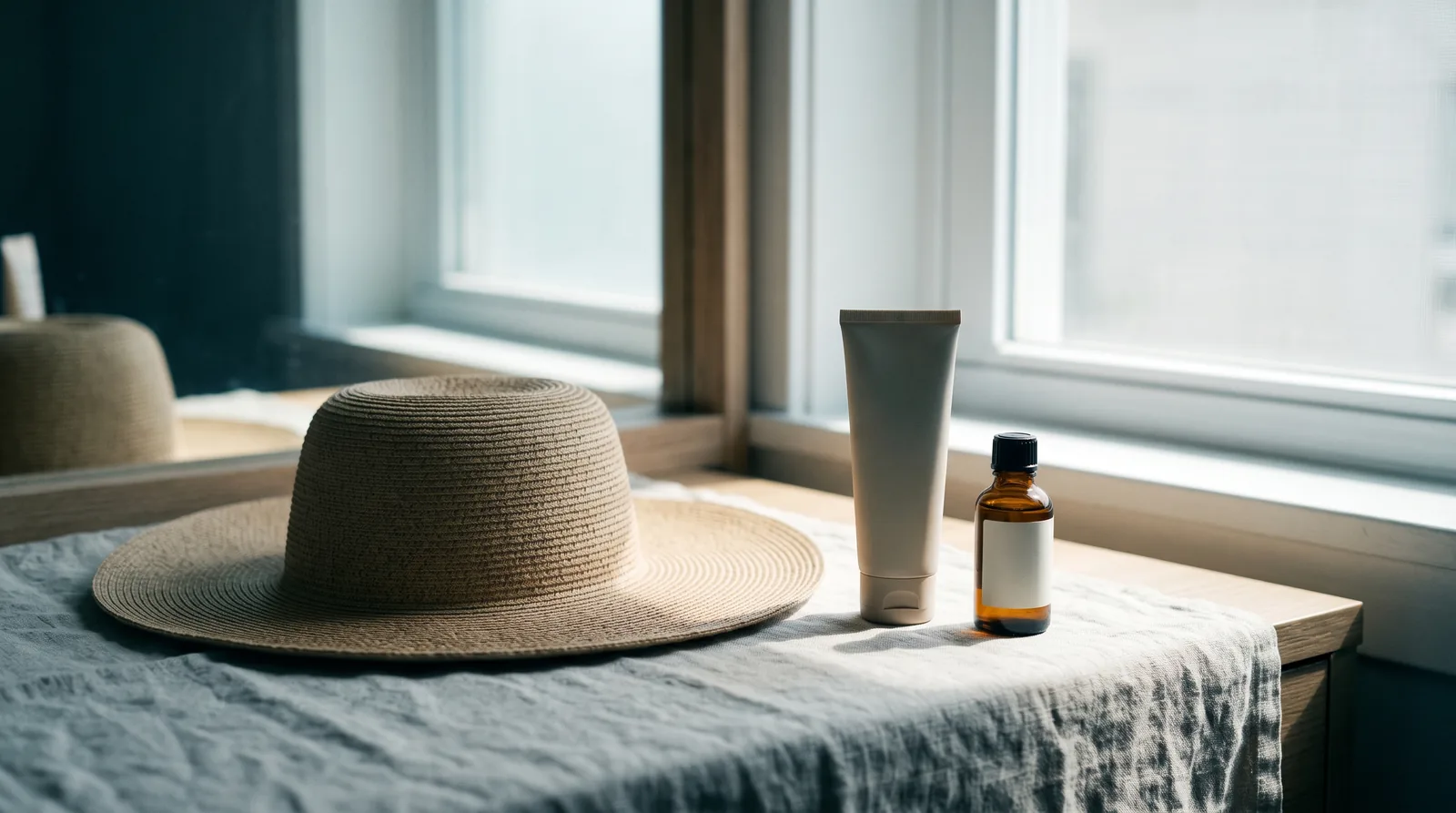
- Physical block: a wide-brim hat and UPF clothing do more for melasma than any serum. The American Academy of Dermatology treats shade, clothing, and sunscreen as one system, not alternatives.
- Heat + light: on beach or hiking days, assume reapplication every 60-90 minutes because sweat strips the film faster.
If you can only change one thing this summer, make it reapplication. It outperforms any brightening serum on the market.
Realistic timeline and limits
How long until you actually see spots fade?
Expect 8-12 weeks of consistent routine before visible fading, and 3-6 months for deeper melasma. This is educational, not medical advice — results vary, and stubborn or spreading pigmentation deserves a dermatologist visit, not more layers.
Honest limits: – Melasma is chronic. You manage it; you don’t cure it with a shelf of serums. – Actives ≠ speed. Doubling niacinamide from 5% to 10% doesn’t double results; it doubles the irritation risk. – Retinoids and strong AHAs are best kept for PM in early autumn, once sun exposure drops. On heavy-sun days, skip them.
Who should skip this approach
Who should buy in — and who should skip?
Go for it if you have mild to moderate summer darkening, PIH from breakouts, or early melasma, and you can commit to daily SPF plus one nighttime brightener for three months.
Skip or see a dermatologist first if the pigmentation is spreading rapidly, changing shape, itching, or accompanied by other symptoms — those aren’t skincare problems. Also skip layering brighteners if your skin is currently compromised (peeling, sunburned, or reactive) — repair the barrier first, then reintroduce actives one at a time.
Frequently Asked Questions
Q. Can you actually get rid of summer pigmentation completely?
A. Most surface pigmentation and PIH can fade significantly with consistent SPF and one brightener over 2-3 months, but deeper melasma tends to return each summer and needs long-term management rather than a one-time fix.
Q. Is vitamin C or niacinamide better for dark spots?
A. They do different jobs — vitamin C is a morning antioxidant that also brightens, niacinamide is a gentle all-day brightener that pairs with almost anything. If you can only pick one, choose niacinamide for sensitive skin and vitamin C for dullness plus spots.
Q. Do I need to reapply sunscreen if I’m indoors near a window?
A. UVA passes through window glass, so if you sit by a bright window for hours, reapply every 3-4 hours. If you’re in a dim interior room, morning application is usually enough.
Q. Can I use tranexamic acid and niacinamide together?
A. Yes, they’re compatible and often combined in Korean brightening serums. Introduce one at a time, though, so you can spot which one triggers irritation if any.
Q. Will retinol help my summer pigmentation faster?
A. Retinol supports cell turnover, which can help spots fade, but it also increases sun sensitivity. In peak summer, keep retinol to PM only and never skip the next morning’s SPF — otherwise you can worsen the pigmentation you’re trying to treat.
Summer pigmentation isn’t a mystery — it’s usually under-reapplied sunscreen, one too many actives, and skin that never gets a chance to cool down. Fix those three, add one brightener your skin tolerates, and give it a full cycle before judging results. Curated, tested, and explained — so you can build a routine you’ll actually keep, especially the boring parts that do the real work.