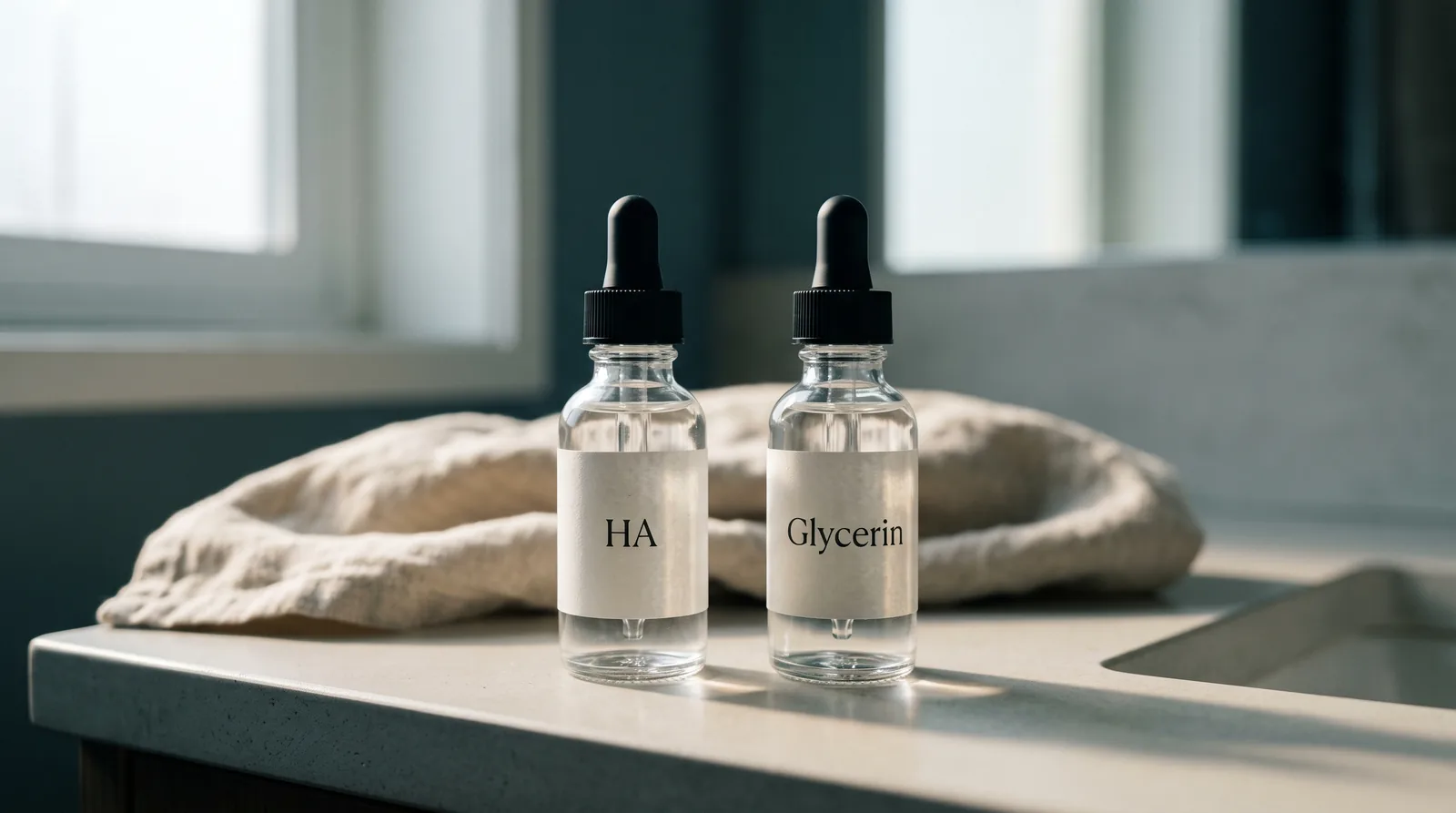
Here’s the short version of hyaluronic acid vs glycerin: they do the same job (pull water into skin), but glycerin is the cheaper, more reliable base, while hyaluronic acid adds a lighter, plumper finish on top. For dehydrated skin, you don’t need both — you need one used correctly. This guide explains the difference, how to layer them in a Korean routine, and who can skip a step.
Ingredient basics
What’s the difference between hyaluronic acid and glycerin?
Both are humectants, meaning they bind water and hold it in the upper layers of skin — but they’re built differently. Glycerin is a small, simple molecule (a sugar alcohol) that’s been in skincare for over a century and is one of the most-studied cosmetic ingredients on the INCI decoder database. Hyaluronic acid, usually listed as sodium hyaluronate on Korean labels, is a much larger molecule your body already makes — you can see its INCI profile on INCI decoder.
The practical difference: glycerin sinks in fast and feels slightly tacky; hyaluronic acid sits more on the surface and feels slippery, plumping the skin visually. Modern Korean formulas often use “multi-weight” hyaluronic acid, blending low, medium, and high molecular weights so it hydrates at different depths of the stratum corneum.
Fit and performance
Which humectant works better for dehydrated skin?
For most dehydrated skin, glycerin actually does more of the heavy lifting than reviews give it credit for. It’s smaller, penetrates the top layer more easily, and works across humidity levels — which is why almost every Korean toner and essence lists it high on the INCI.
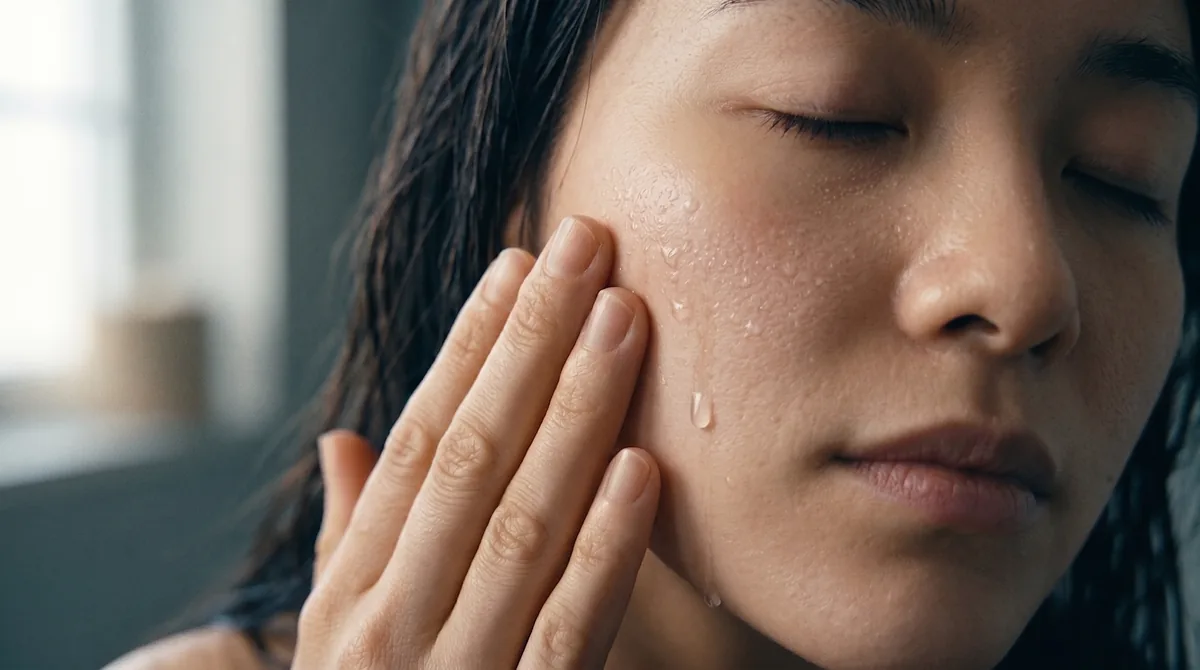
Hyaluronic acid earns its place when your skin already looks tired and flat — it plumps the surface and makes fine dehydration lines less obvious for a few hours. But there’s an honest limitation: in very dry air (winter heating, planes, low humidity), high-molecular-weight hyaluronic acid can pull moisture from your skin instead of into it if you don’t seal it in. Apply it on damp skin, then follow with a cream or facial oil.
Routine placement
How do you layer humectants in a Korean routine?
Layer thinnest to thickest, and keep each layer slightly damp before the next. A typical Korean sequence looks like: cleanser → toner (often glycerin-forward) → hyaluronic acid essence or serum → emulsion → cream → SPF in the morning.
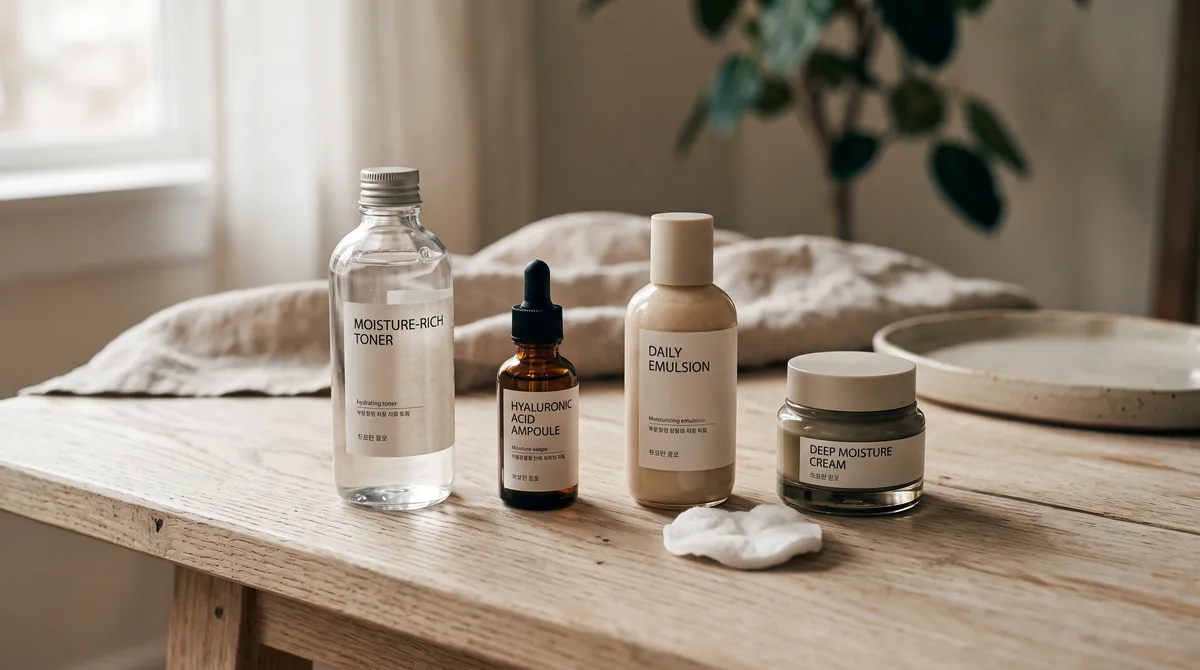
Two rules matter more than the exact number of steps. First, hyaluronic acid goes on damp skin — pat it in right after your toner, not on dry skin. Second, don’t stack multiple hyaluronic acid products; one is enough, and doubling up mostly wastes product. If you want extra hydration, add a ceramide or squalane layer over the HA rather than another HA serum.
Buy vs. skip
Who should choose which — and who can skip one?
Choose glycerin-forward products if you have oily or combination skin, live in a humid climate, or want the cheapest reliable route to comfortable hydration. A well-formulated toner with glycerin high in the list is often all normal-to-oily skin needs before moisturizer.
Choose hyaluronic acid if your skin looks dull, flat, or shows fine dehydration lines by evening, or if you enjoy the plumped, dewy finish it gives under makeup. Skip HA (and save the money) if your skin already feels comfortable after toner and moisturizer — the returns are small if you’re not visibly dehydrated. This is educational, not medical advice, and results vary with climate, age, and the rest of your routine.
Frequently Asked Questions
Q. Can I use hyaluronic acid and glycerin together?
A. Yes — most Korean essences already contain both. Using a glycerin toner followed by an HA serum is a common, safe combination.
Q. Does hyaluronic acid dry out your skin?
A. It can feel drying if applied to dry skin in low-humidity air, because it may pull moisture upward instead of inward. Apply on damp skin and always seal with a moisturizer.
Q. Which is better for oily skin, hyaluronic acid or glycerin?
A. Both are oil-free and suit oily skin, but a lightweight glycerin toner is usually enough. HA serums are optional if you want extra plumping without added oil.
Q. Do I need a high percentage of hyaluronic acid to see results?
A. No. Concentrations in leave-on skincare are usually under 2%, and multi-weight formulas matter more than a single high number.
Q. Are there any skin types that should avoid these humectants?
A. Very few. Both are considered low-irritation by cosmetic safety reviews, but anyone with a known allergy or reactive skin should patch-test first and consult a dermatologist for medical concerns.
The honest verdict: hyaluronic acid vs glycerin isn’t really a competition — it’s a question of order and fit. Glycerin is the dependable base almost every routine already includes; hyaluronic acid is a lighter, more visual layer that’s worth adding only when your skin actually needs the plumping. Neither replaces the moisturizer or SPF that keep hydration in.
Curated, tested, and explained — so you can build a routine you’ll actually keep. If you’re rebuilding your routine from scratch this season, start with one glycerin-forward toner, one gentle moisturizer, and daily sunscreen, then decide whether HA earns a spot.