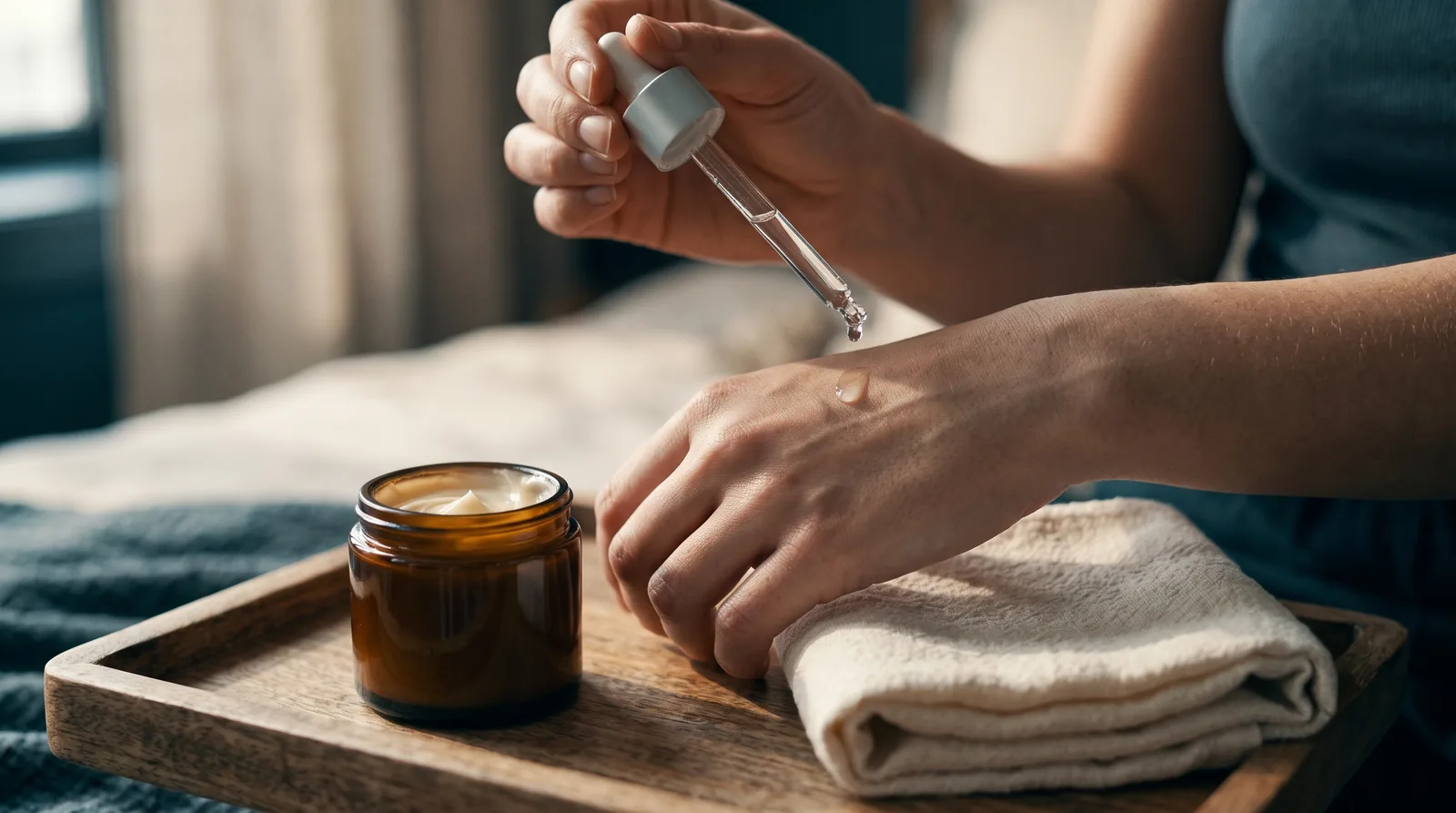
The short version on skincare layering order: apply products from thinnest to thickest, and let each one settle for about 30-60 seconds before the next. That single rule keeps hydrators absorbing, actives working, and creams sealing — instead of pilling into little rolls on your cheeks. Below, I’ll break down what “thin to thick” actually means, where wait times matter, and how to layer without turning your routine into a chore.
The core rule
What does “thin to thick” actually mean in skincare?
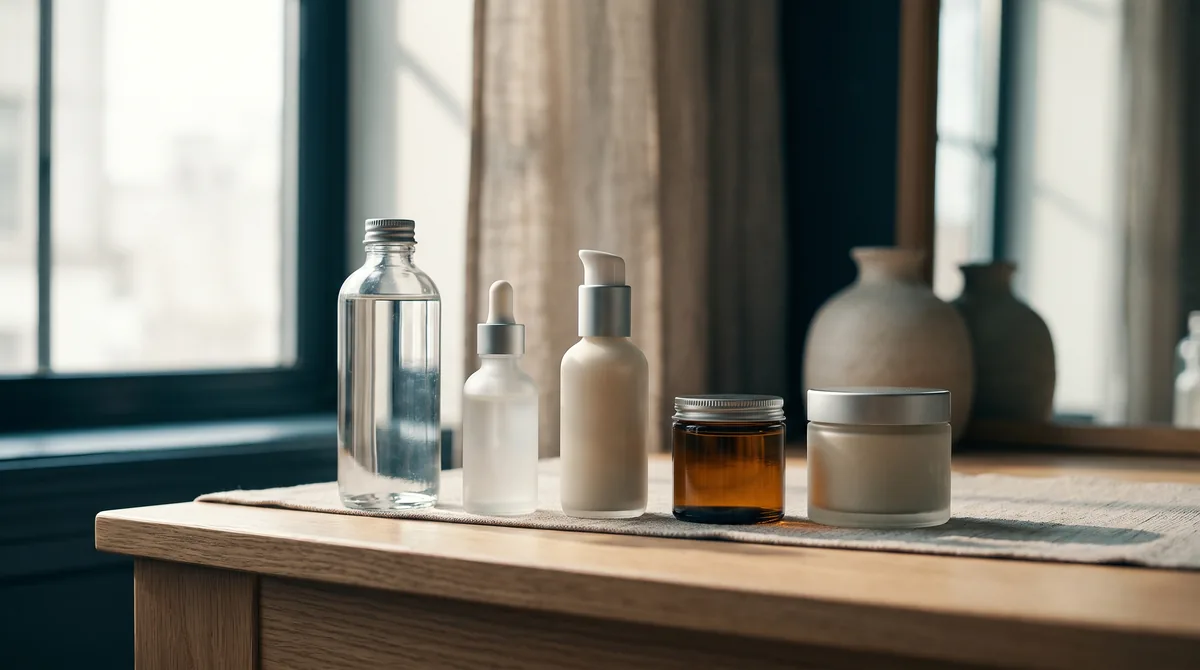
Thin to thick means you apply products in order of texture and water content, not price or hype. Watery layers (toner, essence) go first because they absorb fast; occlusive layers (cream, oil, balm) go last because they seal everything in.
A rough K-beauty order looks like this: cleanser → hydrating toner → essence → serum/ampoule → sheet mask (optional) → eye cream → moisturizer → face oil (PM) or SPF (AM). Not every step is required — this is a menu, not a checklist.
The reason this order matters is simple physics. If you put a heavy cream on first, the watery serum underneath has nowhere to go. It sits on top, pills up, and you’ve essentially paid for a product that never touched your skin.
When textures tie
How do you layer two products with similar textures?
When two products feel about the same — say, two watery serums — layer the one with the more active or targeted ingredient first, so it lands on clean, slightly damp skin. Hydrators and general soothing steps can follow.
A practical example: if you use a niacinamide serum and a hyaluronic acid essence, the niacinamide (the active) goes first. The HA layer follows to lock in hydration and cushion the active.
The one caveat: pH-sensitive ingredients (like a low-pH vitamin C) prefer bare, dry skin and a short wait before anything else. Check the brand’s own directions here — per the product page is more reliable than a generic rule.
Timing between steps
How long should you wait between skincare steps?
Roughly 30-60 seconds between most steps — enough for the last layer to sink in, but before your skin fully dries out. Damp skin actually helps the next layer spread and absorb.
Two exceptions worth knowing. Low-pH actives (vitamin C, some exfoliating toners) usually want a longer wait, closer to 1-2 minutes, so the pH stabilizes before you buffer it with hydrators. Sunscreen also benefits from a full minute or two before makeup, so the film sets evenly.
If you’re honest with yourself and know you won’t wait, prioritize the two gaps that matter most: after an active treatment, and before SPF. Everything else is forgiving.
Morning vs. night
Does skincare layering order change for AM and PM?
Yes — the direction is the same (thin to thick), but the goals differ. Morning routines end in SPF and lean on antioxidants and hydration. Night routines end in a richer cream or oil and are where actives (retinoids, exfoliating acids) belong.
A calm AM lineup: gentle cleanse → hydrating toner → antioxidant serum (like vitamin C) → moisturizer → SPF 30+ as the final step. Sunscreen is non-negotiable and always the last skincare layer before makeup.
A calm PM lineup: oil or balm cleanse → water cleanse → hydrating toner → treatment (retinoid or exfoliant, a few nights a week) → moisturizer → optional face oil. Don’t stack multiple strong actives the same night — that’s how barriers break.
Who should simplify
Who should skip half these steps?
If your skin is reactive, if you’re new to routines, or if you know you won’t keep up with 7 bottles — skip the middle. A four-step routine (cleanser, hydrating toner, moisturizer, SPF) is enough for most people, most days.
Add one targeted product only when you have a specific goal: a niacinamide serum for texture, a retinoid at night for aging concerns, a ceramide cream for a stressed barrier. One goal, one product at a time.
The honest trade-off: a longer routine can deliver more, but only if you actually do it every day. A three-step routine you keep beats a ten-step routine you abandon by week two. Curated, tested, and explained — so you can build a routine you’ll actually keep.
Frequently Asked Questions
Q. Can I skip toner entirely?
A. Yes. Modern hydrating toners are optional if your moisturizer already delivers enough water and comfort. Skip it if your skin feels fine without it.
Q. Do I put sunscreen before or after moisturizer?
A. Sunscreen goes **after** moisturizer, as the final skincare step in the morning. Wait about a minute before applying makeup so the SPF film sets.
Q. Why does my skincare pill up into little rolls?
A. Usually one of three reasons: you applied too much product, you didn’t wait long enough between layers, or a silicone-heavy product is sitting under a water-based one. Reduce the amount and wait 30-60 seconds.
Q. Can I mix vitamin C and niacinamide in the same routine?
A. Yes, current formulations handle this fine — the old "they cancel out" claim is outdated. Layer vitamin C first on bare skin, wait a minute, then apply niacinamide.
Q. How many active ingredients can I use in one routine?
A. As a general guide, one strong active per session (AM or PM). Stacking retinoids with acids or high-strength vitamin C often stresses the barrier and causes irritation.
The verdict on skincare layering order: thin to thick, wait 30-60 seconds between steps, and end with SPF in the morning or a richer cream at night. Everything else — the number of steps, which serums, which brands — is personal fit. Treat this as educational, not medical advice; results vary by skin type, climate, and formula. If a routine feels like a chore, cut it in half. The best skincare layering order is the one you’ll still be doing next month.