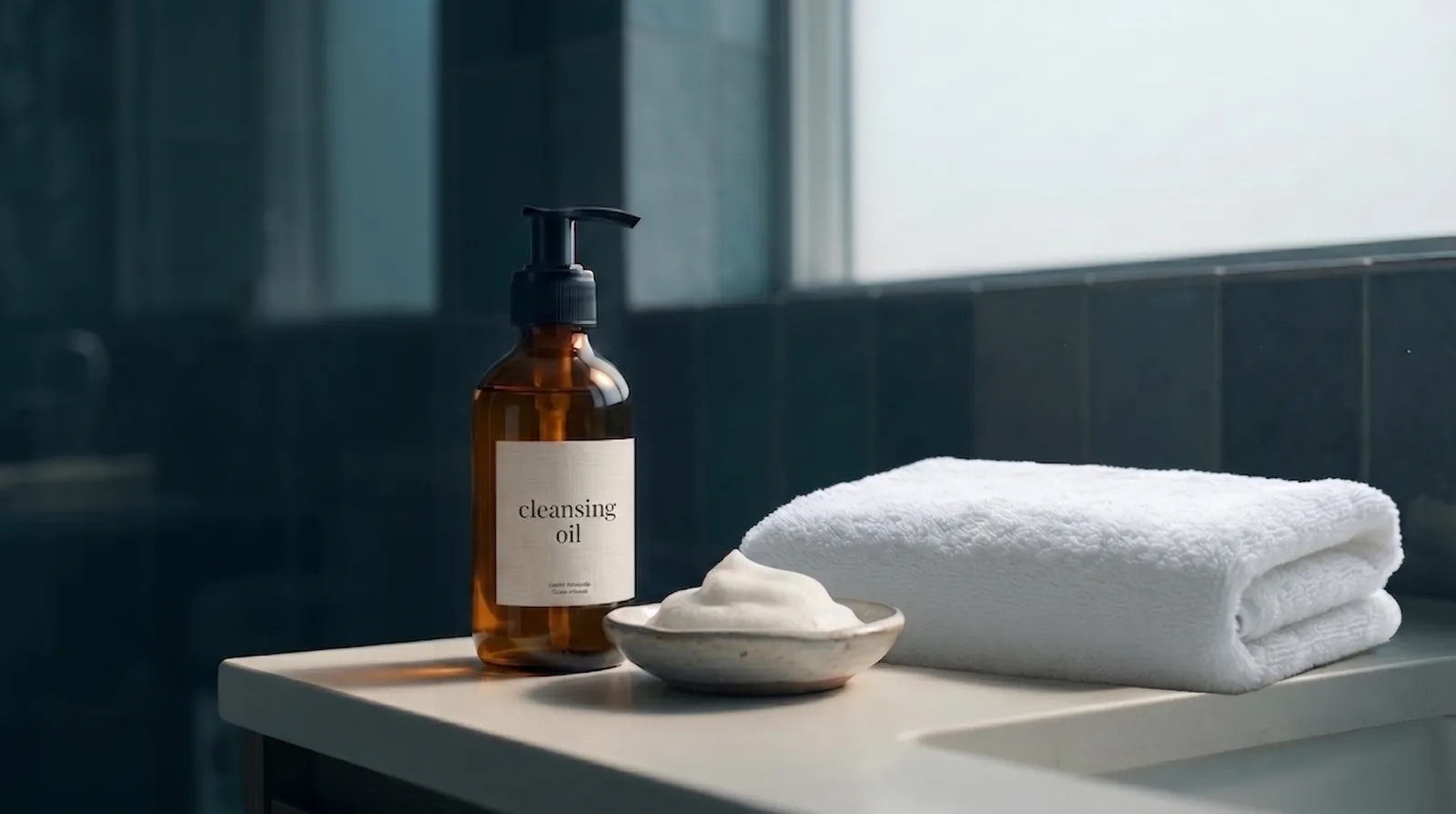
Double cleansing is the Korean two-step PM wash: an oil-based cleanser first to break down oil-soluble grime, then a low-pH water-based cleanser to rinse away everything water-loving. Done in that order, it removes SPF and sebum without stripping your barrier — which is the whole point. Get the sequence wrong, over-scrub, or use hot water, and you’ll trade clean skin for tightness and redness.
The correct order
Why does oil cleanser go before water cleanser?
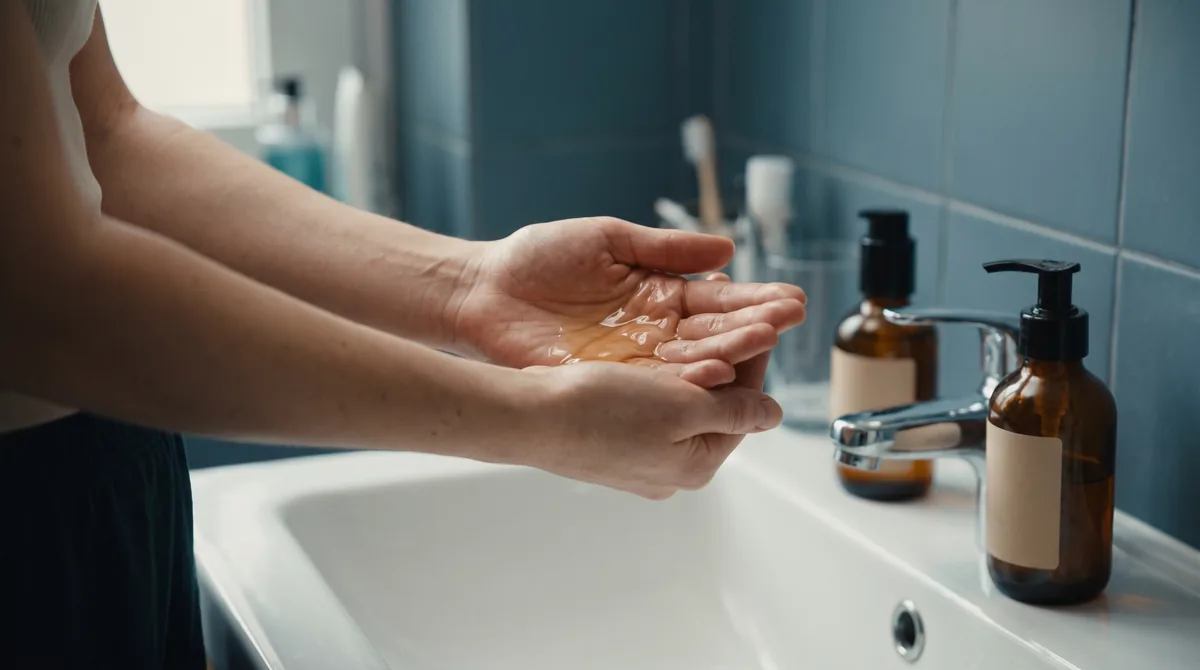
Oil dissolves oil. Sunscreen, sebum, and most makeup are oil-soluble, so a water-based foam alone can’t break them down — it just pushes them around. Applying the oil cleanser to dry skin lets it bind to those layers first, then the water cleanser handles what’s left: sweat, dust, and any oil residue.
Reversing the order (foam first, oil second) leaves an oily film behind and often triggers a second rinse with hotter water — which is where barrier damage starts. Keep it simple: oil on dry skin, emulsify with a splash of lukewarm water until it turns milky, rinse, then move to the water cleanser.
Product picks
What kind of oil and water cleanser should you pick?
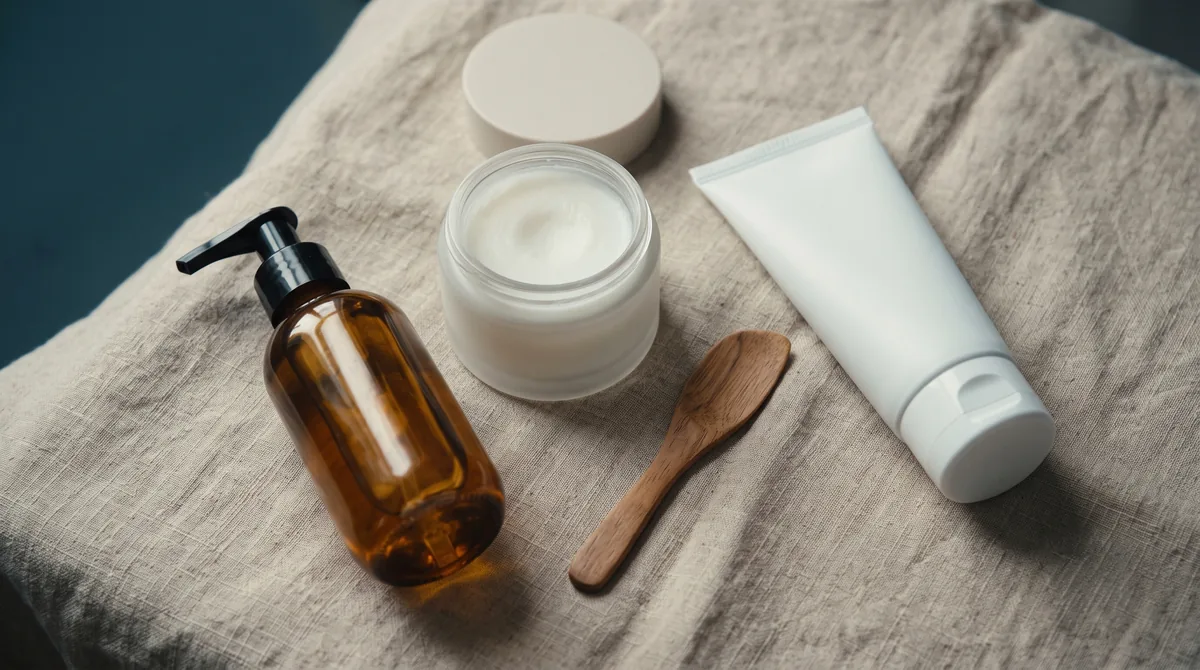
For step one, look for a cleansing oil or balm with lightweight esters (caprylic/capric triglyceride, ethylhexyl palmitate) and an emulsifier so it rinses clean. Popular K-beauty options include Banila Co Clean It Zero Original (balm, ~$20 for 100 ml) and Beauty of Joseon Ginseng Cleansing Oil (~$18 for 210 ml) — both emulsify well and don’t leave a greasy veil.
For step two, choose a low-pH (around 5.5) gel or cream cleanser rather than a squeaky high-pH foam. COSRX Low pH Good Morning Gel Cleanser (~$12, 150 ml) and Round Lab 1025 Dokdo Cleanser (~$17, 150 ml) are steady picks that rinse without tightness. Avoid sulfates (SLS) and heavy fragrance if your skin runs sensitive or dry.
Dry and sensitive skin
How should you double cleanse if your skin is dry or reactive?
Cut the contact time. Keep each step under 60 seconds, and never let the water run hot — lukewarm only. Choose a balm oil cleanser (less drag than a runny oil) and a creamy, non-foaming second step; skip anything with menthol, high alcohol, or strong fragrance.
If your skin still feels tight after cleansing, that’s a signal, not a badge of clean. Try shortening step two to 20-30 seconds, or on low-grime days, skip the oil step and use only the gentle water cleanser. The barrier heals faster when you under-do it than when you scrub.
Timing and frequency
Do you need to double cleanse in the morning too?
No — AM double cleansing is unnecessary for most people. Overnight, your skin produces sebum and a bit of sweat, both of which a single low-pH water cleanser handles perfectly. Doing a full two-step wash before you’ve even applied anything oil-soluble is where over-cleansing creeps in.
At night, double cleanse whenever you wore sunscreen, makeup, or spent hours outdoors. On a bare-face, indoors-all-day evening, one gentle water cleanser is enough. Consistency beats intensity — a nightly one-step is better than an aggressive two-step you dread.
Frequently Asked Questions
Q. Can I use micellar water instead of an oil cleanser?
A. Micellar water is milder than an oil cleanser and works for light makeup or SPF-free days, but it doesn’t dissolve heavy sunscreen or long-wear makeup as thoroughly. For a full SPF day, an oil or balm cleanser is a better step one.
Q. Should I double cleanse if I only wear sunscreen, no makeup?
A. Yes. Modern sunscreens — especially water-resistant or mineral formulas — are oil-soluble and need an oil-based cleanser to lift them off. A foam alone tends to leave a fine film that can dull the skin over time.
Q. Does double cleansing cause breakouts?
A. It shouldn’t, if the products suit your skin and you don’t over-scrub. Breakouts after starting double cleansing usually trace back to a heavy oil that isn’t fully rinsing, or a high-pH foam stripping the barrier. Switch to a lighter oil and a low-pH gel and reassess in two weeks.
Q. How long should the whole routine take?
A. About 90 seconds total — 30-45 seconds massaging the oil cleanser, then 30-45 seconds with the water cleanser. Longer isn’t cleaner; it just increases irritation risk.
Q. Can I use a cleansing brush or silicone pad?
A. You can, but sparingly — once or twice a week at most, and only on step two. Daily mechanical exfoliation on top of double cleansing is a common cause of a compromised barrier.
Double cleansing works when you respect the order and keep it gentle: oil first on dry skin, then a low-pH water cleanser, lukewarm water, under 90 seconds total. It’s a nightly habit, not a morning one, and it’s optional on truly bare-face days. Curated, tested, and explained — so you can build a routine you’ll actually keep. This is educational, not medical advice; ingredient tolerance and results vary by skin, so adjust the products and timing to what your barrier tells you.