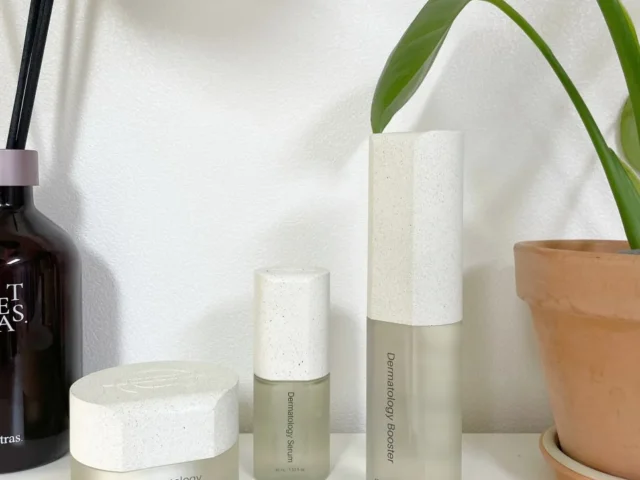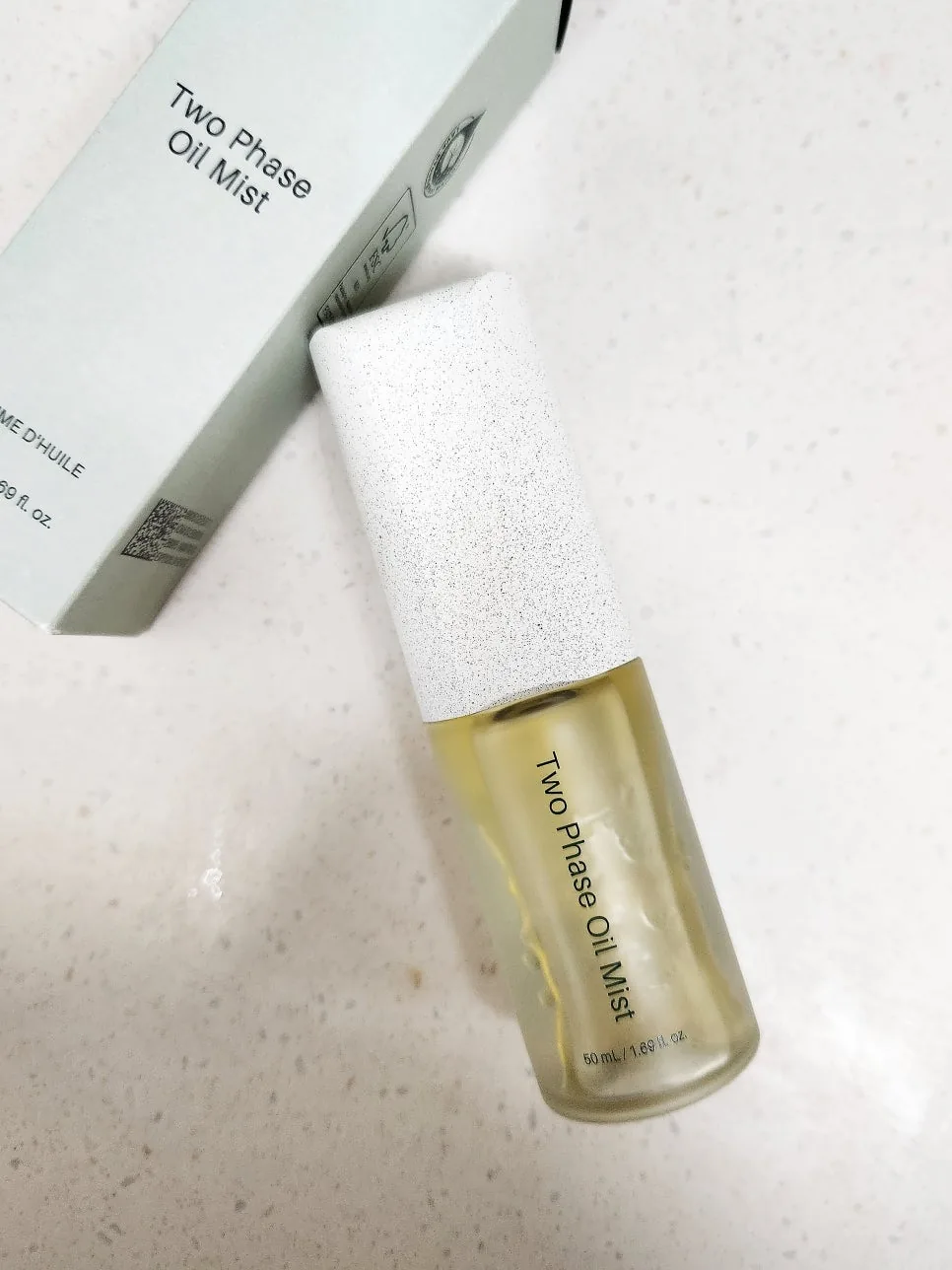
Put the words “oil mist” and “summer” in the same sentence and most people picture a forehead you could fry an egg on. I thought the same. Anything with “oil” on the label went straight off my summer list, and I reached for water mists and light toners instead. These days I use ICD’s Two Phase Oil Mist because it’s summer, and the reason has more to do with air-conditioning than with the beach.
What follows covers what happened on my own skin, which parts of the popular explanation hold up (and which don’t), what a two-phase mist is, and how to use one so it helps rather than just sitting on your face.
Where it started
The water mist habit that made my T-zone shinier
I spend most summer days indoors with the air-con running. By early afternoon my face would feel tight, so I’d spray a water mist, and then spray it again an hour later. The odd part was that my nose and forehead got oilier as the afternoon went on, not less. More water was going on, and somehow I was more shiny.
Once I swapped the water mist for this oil mist, the afternoon shine on my T-zone felt noticeably lighter. My first reaction was the obvious one: how does spraying oil make me less greasy? So I went looking for an explanation. I’ll keep my claim to what I actually noticed, though. This is one person’s skin in one office, not a trial.

The theory, checked
Why a water-only mist can backfire in air-conditioning
A mist that’s mostly water barely soaks in before it evaporates, and air-conditioned air is dry, so it evaporates fast. Evaporating water can take some of your skin’s surface moisture with it. It’s the same thing that happens when you lick chapped lips: they feel better for ten seconds and then worse. That part of the explanation is well established. A plain water spritz with nothing to hold it in place feels refreshing for a moment, and then your skin can end up tighter than before.
You’ll often hear the next step in K-beauty circles: when skin is short on water, it “makes more oil to compensate”, and that’s how you get dehydrated oily skin. I’d take that one with a pinch of salt. Sebum output is mostly driven by hormones, and there isn’t strong evidence that a dry skin surface tells your oil glands to work harder. “Dehydrated oily skin” is still a useful description, because oily skin can lack water and feel tight at the same time. The cause-and-effect story is just shakier than people make it sound.
The part I’d stand behind is simpler. An oil layer on top of water works like a thin lid. It slows down how fast the water you’ve just applied escapes, so your skin stays comfortable for longer. Comfortable skin doesn’t send you back to the mist bottle every hour. Say your cheeks feel tight at your desk by 2 p.m. while your T-zone shines by 3. Then the fix is to stop topping up with water that won’t stay put, not to add more of it.
What’s in the bottle
Two layers, one bottle: how a bi-phase mist works
A “two-phase” or bi-phase mist keeps an oil layer and a water layer in the same bottle without blending them permanently. You can see this in the bottle as it sits: a golden oil band floats on top of the clearer watery layer. ICD (Incellderm, a Korean skincare line) describes the top phase as a vitamin oil layer and the bottom phase as a hydrating, nourishing water layer. The bottle holds 50 mL (1.69 fl oz).
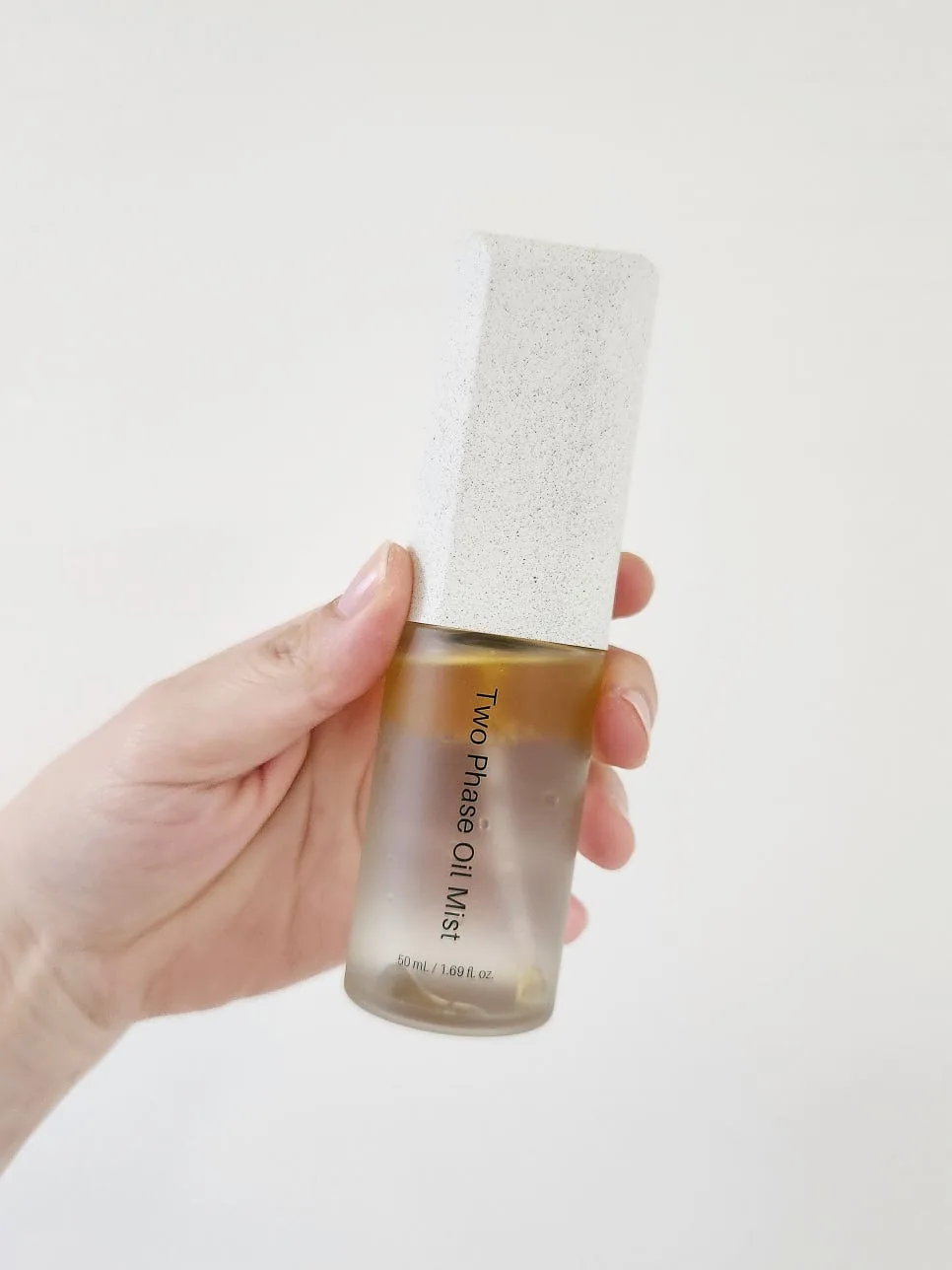
When you shake the bottle, the two phases briefly break into tiny droplets and mix. The liquid goes from layered to an even, cloudy pale gold. Each spray then puts down water and oil together, so your skin gets hydration and a light seal in one step. Leave the bottle for a minute and the phases separate again. That’s how the formula is designed, not a sign that it’s gone off.
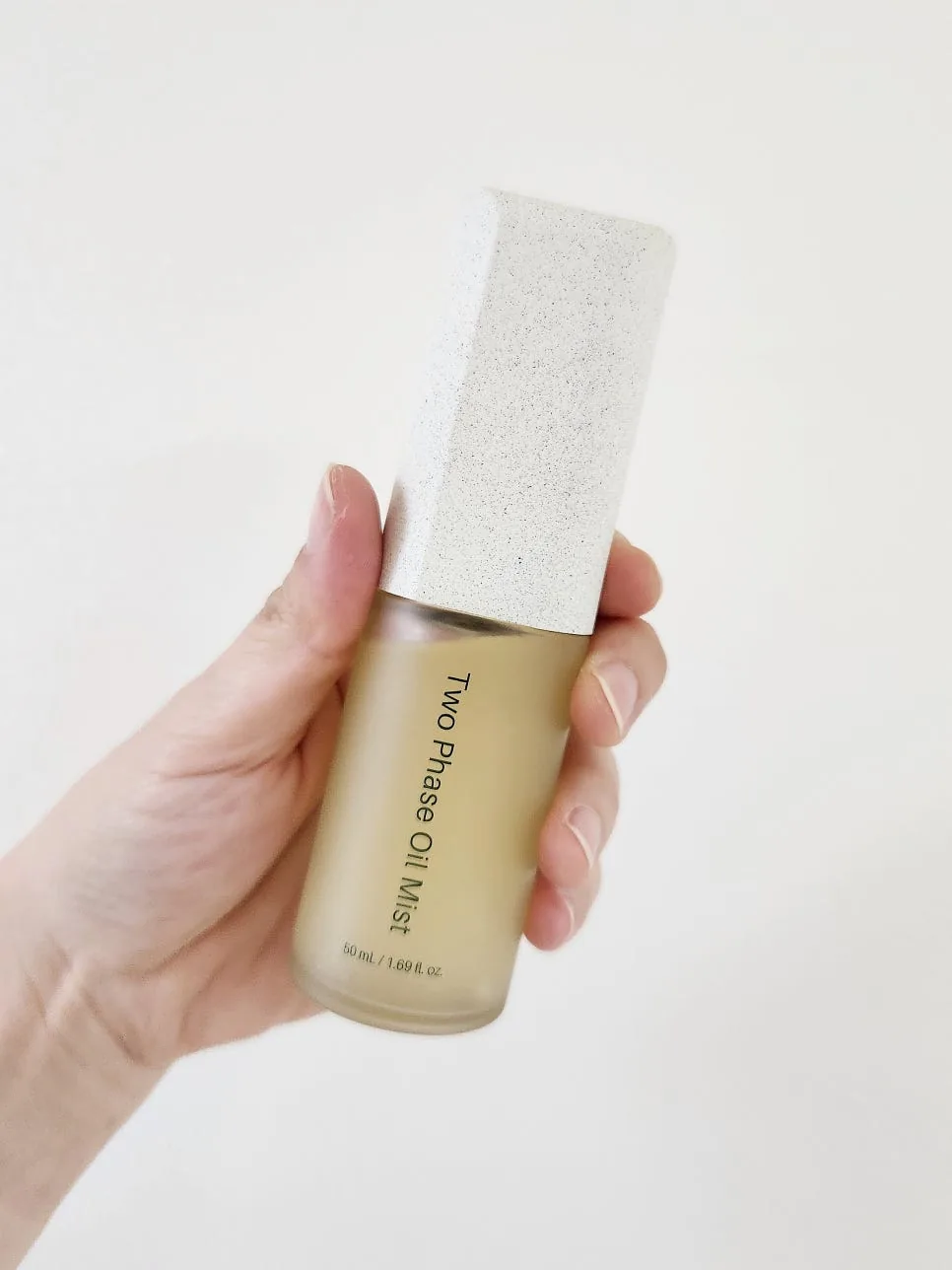
ICD markets the mist for hydration and glow, along with smoother-looking texture and a more even tone. Its product art also mentions antioxidant care from the vitamin-rich oil phase. Those are the brand’s cosmetic claims, and I’d judge the mist on the part you can feel straight away: comfortable, dewy skin that doesn’t tighten up an hour later. Before you buy any bi-phase mist, read the INCI list on the box. Check which plant oils make up the oil phase and whether fragrance is listed, especially if your skin reacts to particular oils.
Technique matters
How to use it so it doesn’t just sit on your face
Most of the complaints I hear about oil mists (“it just beads up”, “it feels greasy”) come down to technique, not the formula. There are three steps.
- Shake it every time. If you skip the shake, the first sprays are mostly oil and the last ones mostly water. You want both phases in every spray.
- Hold it 15–20 cm (about 6–8 inches) from your face. Too close and the mist lands as wet drops that pool on the surface instead of settling as a fine, even layer. Close your eyes while you spray.
- Press it in with your palms. Light pressing helps the layer settle. Rubbing just pushes the oil around, and over sunscreen or makeup rubbing is exactly what you don’t want.

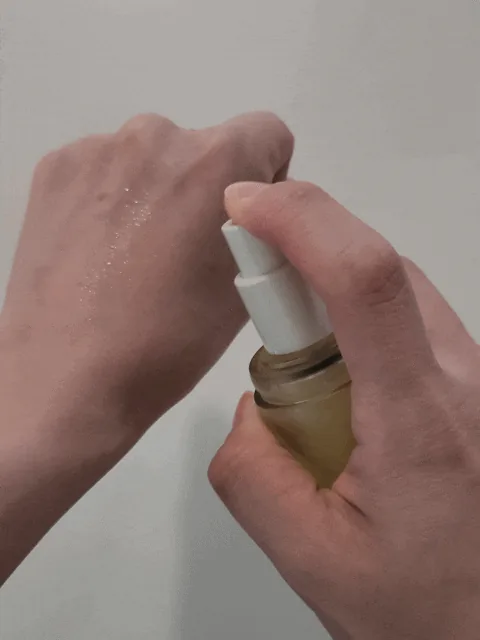
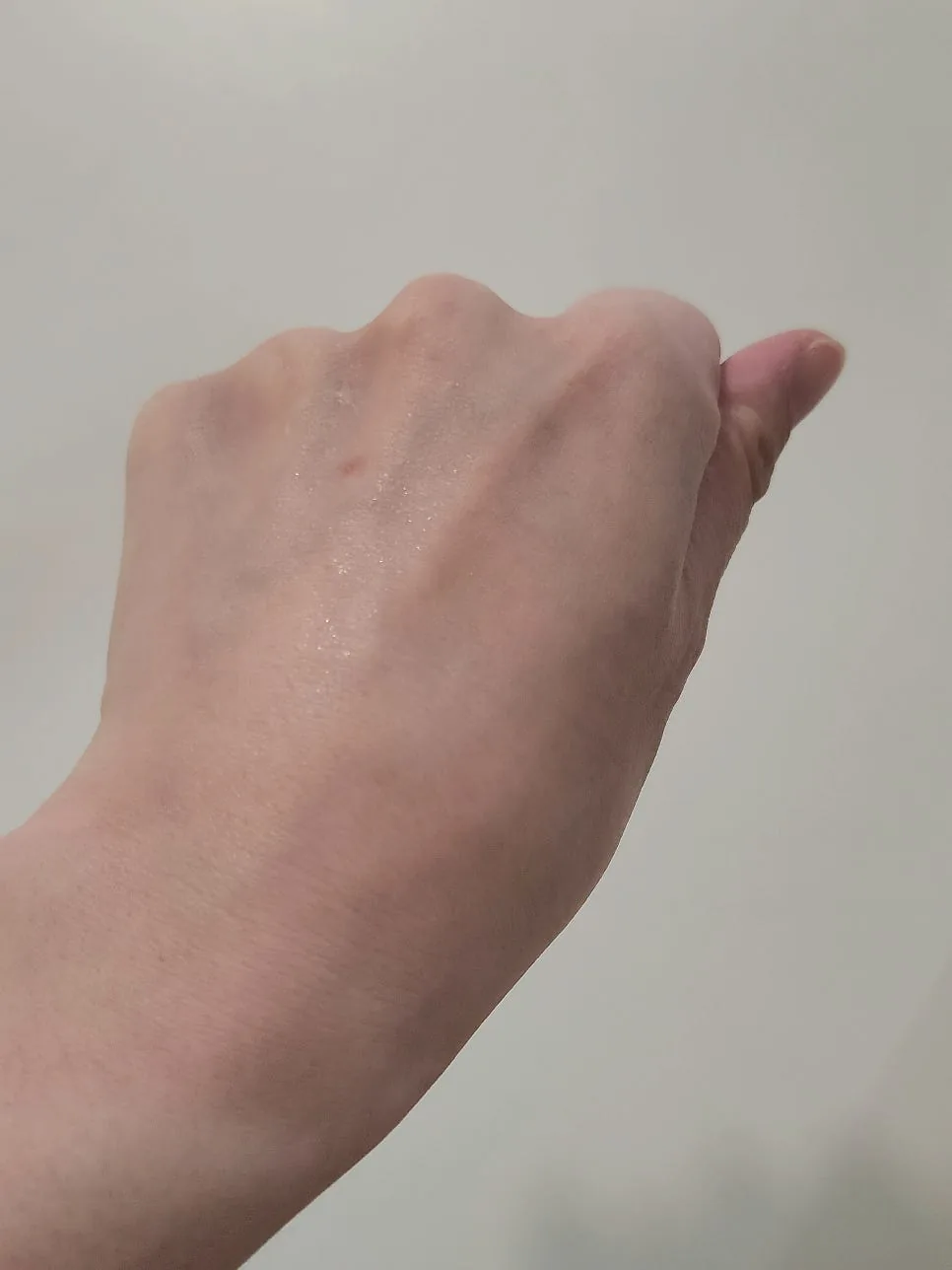
If you want to see how fine the spray is before it goes near your face, test it on the back of your hand. At the right distance it lands as a scatter of tiny droplets that settle into a soft sheen, not a slick.
Routine placement
Where an oil mist fits in a summer routine
An oil mist is a top-up and finishing step. It doesn’t replace your moisturizer. Here’s how I’d fit it into your routine:
- AM: after your moisturizer, as a light sealing layer. Give it a minute to settle, then apply sunscreen as usual.
- Midday, at your desk: over sunscreen and makeup, sprayed from a distance and pressed in, never rubbed. This is the moment it’s built for: air-con tightness without going back to plain water.
- PM: optional. If your night cream already feels rich enough, you don’t need it here.
The mist can also double as a makeup refresher. A light, even layer of oil can soften a powdery or cakey look and help makeup sit more smoothly in the afternoon. One caveat: oil can break down some long-wear base formulas. If yours starts to slide, keep the mist for bare-skin top-ups, or use a dedicated setting spray for makeup.
Buy it or skip it
Who should try it and who can skip it
This mist suits you if a water mist never seems to help, or seems to leave you shinier by afternoon. It also suits you if you sit in air-conditioning all day and your skin feels tight, or if you dislike heavy face oils but don’t want to give up moisture in summer.
Skip it if you’re oily, comfortable, and don’t spend long hours in dry air. A good gel moisturizer already covers you, and there’s no point adding another step to fix a problem you don’t have. Be cautious if your skin is breakout-prone and you know certain oils don’t agree with it. Read the oil phase on the INCI list first and patch-test along your jawline for a few days.
There’s also a cheaper path. The two-phase structure isn’t exclusive to ICD, and the mechanism I described works the same way in any well-made bi-phase mist. If what you actually want is “water plus a light seal, sprayable over makeup”, you can compare a few options on ingredients and fragrance before you commit to this one.
Frequently Asked Questions
Q. Does an oil mist replace my moisturizer?
A. No. A mist puts down a very thin layer. Use it on top of a moisturizer, or as a midday top-up, not as your only hydrating step.
Q. Why does the bottle separate again after I shake it?
A. Oil and water don’t stay mixed without an emulsifier holding them together. A bi-phase mist is designed to separate at rest and mix again when you shake it.
Q. Can I use it over sunscreen?
A. Yes, if you spray from a distance and press it in gently. Rubbing it in can disturb the sunscreen layer, which is where the protection comes from.
If your afternoon routine is “feel tight, spray water, repeat”, try this for one week: drop the water mist, keep your usual moisturizer, and do a single shaken, well-distanced oil-mist top-up when the tightness starts. Then see what your T-zone looks like at 3 p.m.