You wake up in late August, and your skin feels tight before you’ve even washed your face. That’s the classic late summer skin change — your barrier reacting to cooler mornings, warmer afternoons, and a routine built for July. The fix isn’t a new shelf of products; it’s dialing back what’s stripping you and adding back what your skin is quietly asking for.
Why it happens
Why does my skin suddenly feel tight and reactive in late August?
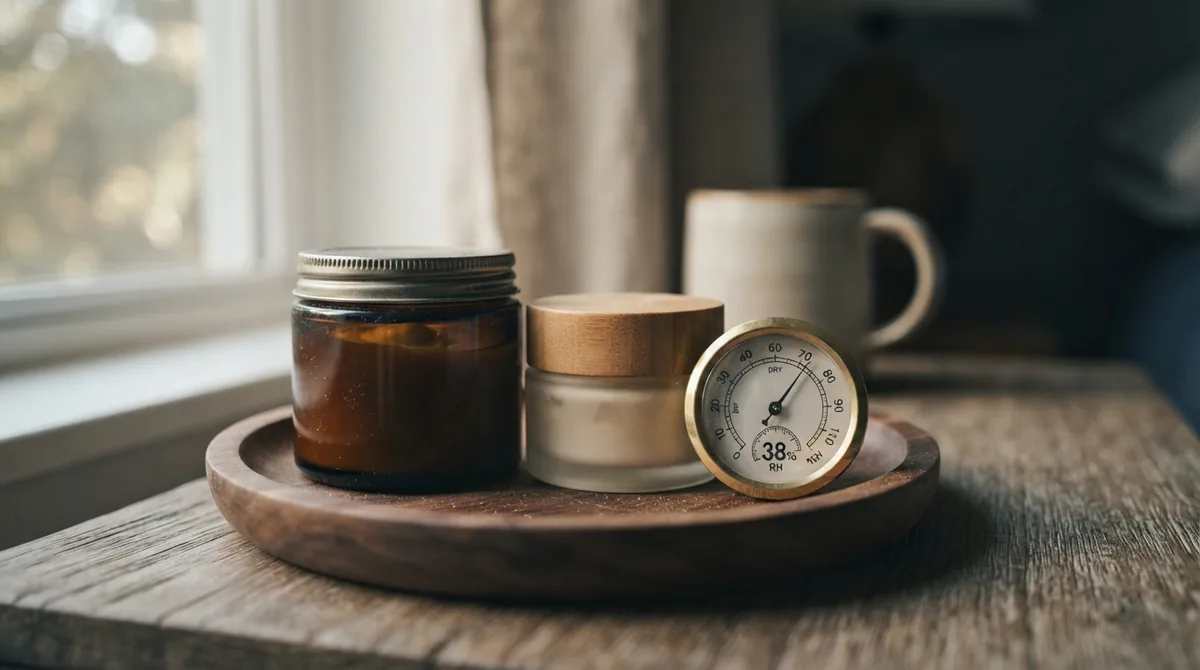
Because humidity drops faster than temperature, your skin loses water while your routine is still set to “oily summer.” Dermatology sources call this transitional-season barrier stress, and it shows up as tightness, tiny flakes around the nose, and sometimes new bumps along the jaw.
Two things are usually happening at once. First, ambient humidity in many cities drops 10-20 points over two weeks in late August, so leave-on hydration evaporates faster. Second, you’re likely still using the same foaming cleanser, high-percent BHA, and gel moisturizer you leaned on in July. That combination was balanced for damp air. It’s over-correcting now.
What to change first
Which routine steps should you change first when the seasons shift?
Change your cleanser and moisturizer before you touch actives. A gentler cleanser and a richer moisturizer solve most late-summer complaints without adding a single new “treatment.”
Here’s the honest order I’d swap, one item at a time, over about a week:
| Step | Summer (July) | Late-summer swap | Why |
|---|---|---|---|
| Cleanse | High-foam gel | Low-pH cream or milky cleanser | Preserves lipids, less tightness |
| Hydrate | Watery toner | Milky toner or essence | Adds humectants + light emollient |
| Moisturize | Gel-cream | Ceramide cream | Replaces barrier lipids you’re losing |
| Treat | Daily BHA / retinal | Every other night, then rebuild | Prevents irritation cascade |
| Protect | SPF (often skipped) | SPF, non-negotiable | UV index in late Aug is still high |
A few concrete K-beauty picks that fit this stage, per each brand’s own product pages and INCI listings on sites like Beauty of Joseon: a low-pH cream cleanser (Beauty of Joseon Green Plum Refreshing Cleanser leads with glycerin and green plum extract), a milky hydrator (Round Lab 1025 Dokdo Toner is water- and butylene-glycol-led, so it hydrates without stripping), and a ceramide moisturizer (Illiyoon Ceramide Ato Concentrate Cream lists ceramide NP high on the INCI). None of these are miracles. They’re just calmer than a July routine.
Actives, carefully
How should you reintroduce actives without wrecking your barrier?
Pause, don’t quit. Cut frequency by half for one week, and only bring an active back once your skin stops feeling tight by mid-morning.
A workable rebuild looks like this: nights 1-3 skip all actives, use only cleanser + essence + ceramide cream. Nights 4-7 add one active back at half-frequency (BHA twice a week, retinal twice a week — never the same night). If your skin still stings, wait another three days. If you’re layering vitamin C in the AM, drop from daily to every other day during the swap. The goal is a boring week, not a “reset” trend.
Sun, still
Do you still need daily sunscreen in late summer and early fall?
Yes — the UV index in most of the northern hemisphere stays at 6-8 through early September, which is high. Skipping SPF now is the single fastest way to end up with new pigmentation you’ll be chasing all winter.
Reapply if you’re outdoors past mid-afternoon. A lightweight Korean chemical SPF (for example, Beauty of Joseon Relief Sun: Rice + Probiotics is a fluid-textured SPF50+ PA++++ that layers under makeup without pilling, per the brand’s product page) is easier to reapply than a heavy mineral. If you prefer mineral, keep a compact cushion for touch-ups.
Who can skip what
Who should skip a “fall skincare overhaul” entirely?
If your skin is oily, calm, and never tight — you can skip the moisturizer swap and just soften your cleanser. Not everyone needs a heavier cream, and forcing one on genuinely oily skin can trigger the breakouts you were trying to avoid.
The people who actually benefit from a full transition swap: dehydrated skin (tight after cleansing), reactive skin (flushes easily), and anyone who ramped up actives in July. Balanced or oily-resilient skin usually just needs sunscreen discipline and a gentler cleanser.
Frequently Asked Questions
Q. Is late summer skin change the same as becoming "sensitive skin"?
A. No. It’s usually temporary barrier stress from humidity and UV swings. Real sensitive skin is a longer-term pattern; transitional irritation typically settles within two to three weeks of a gentler routine.
Q. Can I just add a face oil instead of changing my moisturizer?
A. You can, but oil alone doesn’t add water. If your skin feels tight, add a humectant step (essence or milky toner) first, then seal with a light oil or ceramide cream.
Q. My skin is breaking out and flaking at the same time — what’s going on?
A. That’s a classic dehydrated-oily pattern. Your barrier is losing water, so oil glands overcompensate. Cut actives, add hydration, and don’t over-cleanse. It usually resolves within 7-10 days.
Q. Do I need to switch sunscreens for fall?
A. Not necessarily. Keep an SPF50+ you’ll actually reapply. Some people prefer a slightly more emollient sunscreen as air dries out, but the formula matters less than daily use.
Q. When should I see a dermatologist instead of tweaking my routine?
A. If irritation lasts beyond three weeks, or you see persistent redness, painful bumps, or peeling — get a professional look. This article is educational, not medical advice; results vary.
Late August is not the moment to overhaul your shelf. It’s the moment to notice which step is now working against you, and replace it with something calmer. Fix the cleanser, then the moisturizer, keep the sunscreen, and let actives rejoin on their own schedule. Curated, tested, and explained — so you can build a routine you’ll actually keep, especially the kind of steady, non-dramatic routine that carries well from late summer into fall.